
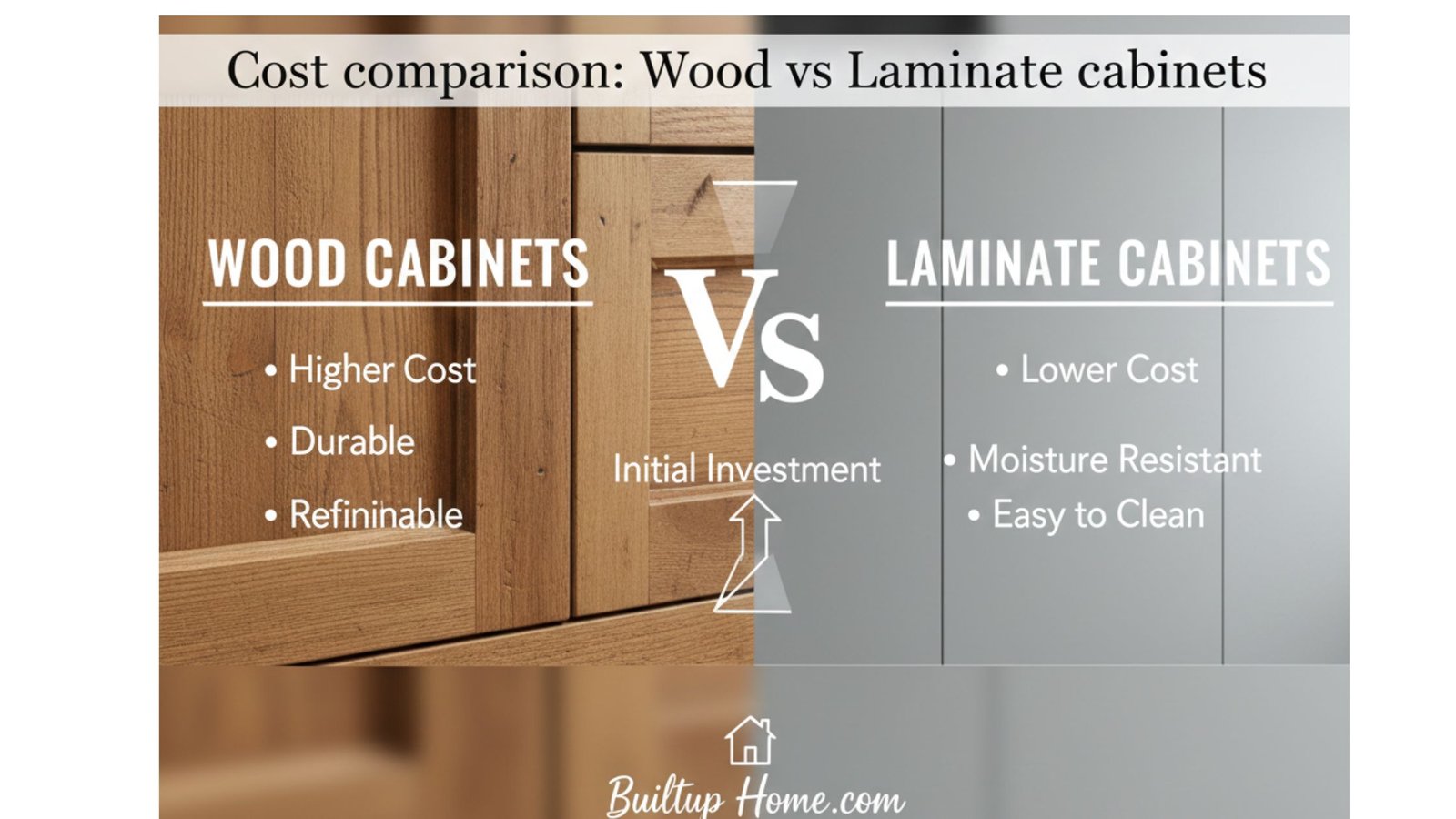
Choosing kitchen cabinets is one of the biggest financial decisions during a home renovation. Homeowners often compare wood vs laminate cabinets to understand which option provides better value, durability, and long-term savings. While both materials have unique strengths, their pricing and maintenance requirements differ significantly. This guide breaks down the real cost comparison to help you make an informed decision.
For more home improvement insights and renovation guides, you can also check out Builtup Home, a trusted resource for homeowners.
Understanding the Materials
Before diving into cost comparisons, it’s essential to understand what each material actually offers.
Wood Cabinets
Wood cabinets are made from natural hardwoods such as oak, maple, cherry, or birch. They provide classic beauty and long-lasting durability.
Laminate Cabinets
Laminate cabinets consist of composite materials (typically MDF or particleboard) covered with a synthetic laminate surface, making them stylish and budget-friendly.
Cost Comparison: Wood vs Laminate Cabinets
1. Initial Purchase Cost
Wood Cabinets
Solid wood is generally more expensive due to:
- Natural material sourcing
- Skilled craftsmanship
- Detailed finishing processes
Price Range:
- Mid-grade hardwood: Moderate to high
- Premium hardwood: High to very high
Laminate Cabinets
Laminate cabinets are more affordable because:
- They are made from engineered wood
- Production is quicker and less labor-intensive
- Laminate surfaces are manufactured in bulk
Price Range:
- Standard laminate: Very affordable
- High-quality laminate: Still cheaper than most hardwoods
Winner (Price): Laminate
2. Installation Costs
Wood Cabinets
Wood cabinets tend to be heavier, requiring skilled installers and more time, increasing installation costs.
Laminate Cabinets
Laminate is lightweight, easier to handle, and faster to install—leading to lower labor charges.
Winner (Installation): Laminate
3. Durability and Longevity Costs
Wood Cabinets
Wood is extremely durable and can last decades with proper care. It can be refinished, repaired, sanded, and repainted, extending its lifespan.
- Long-term cost efficiency: High
- Repair cost: Moderate but manageable
Laminate Cabinets
Laminate cabinets resist stains and moisture but can chip or peel over time. Repairs are more difficult, and replacement is often required.
- Long-term cost efficiency: Moderate
- Repair cost: High (due to limited repairability)
Winner (Durability): Wood
4. Maintenance Costs Over Time
Wood Cabinets
Maintenance includes:
- Refinishing
- Polishing
- Moisture protection
Wood requires care but can be restored repeatedly.
Laminate Cabinets
Laminate is low maintenance:
- Simple cleaning
- Resistant to scratches and stains
However, once damaged, it’s often impossible to refinish.
Winner (Maintenance): Laminate
5. Aesthetic Value & Resale Impact
Wood Cabinets
Wood adds natural elegance and increases the home’s resale value. Buyers often prefer real wood.
Laminate Cabinets
Laminate offers many modern finishes but doesn’t hold the same luxury appeal as wood.
Winner (Resale Value): Wood
Final Cost Summary
| Feature | Wood Cabinets | Laminate Cabinets |
| Initial Cost | Higher | Lower |
| Installation | Higher | Lower |
| Durability | Excellent | Moderate |
| Maintenance | Moderate | Low |
| Repairability | High | Low |
| Resale Value | Higher | Moderate |
| Long-Term Value | Excellent | Good |
Which Should You Choose?
Choose Wood Cabinets If:
- You want long-term durability
- You value natural beauty and higher resale value
- Your budget allows for a higher upfront investment
Choose Laminate Cabinets If:
- You want an affordable and stylish option
- You prefer low-maintenance materials
- You need a quick renovation on a budget
Both wood and laminate cabinets offer excellent benefits, but your final choice depends on your budget, style preferences, and how long you plan to stay in your home.
Final Thoughts
The cost comparison between wood vs laminate cabinets shows a clear divide: laminate wins in affordability and ease of installation, while wood excels in durability, repairability, and long-term home value. Understanding these differences helps homeowners choose a cabinet material that fits their financial plan and lifestyle needs.