
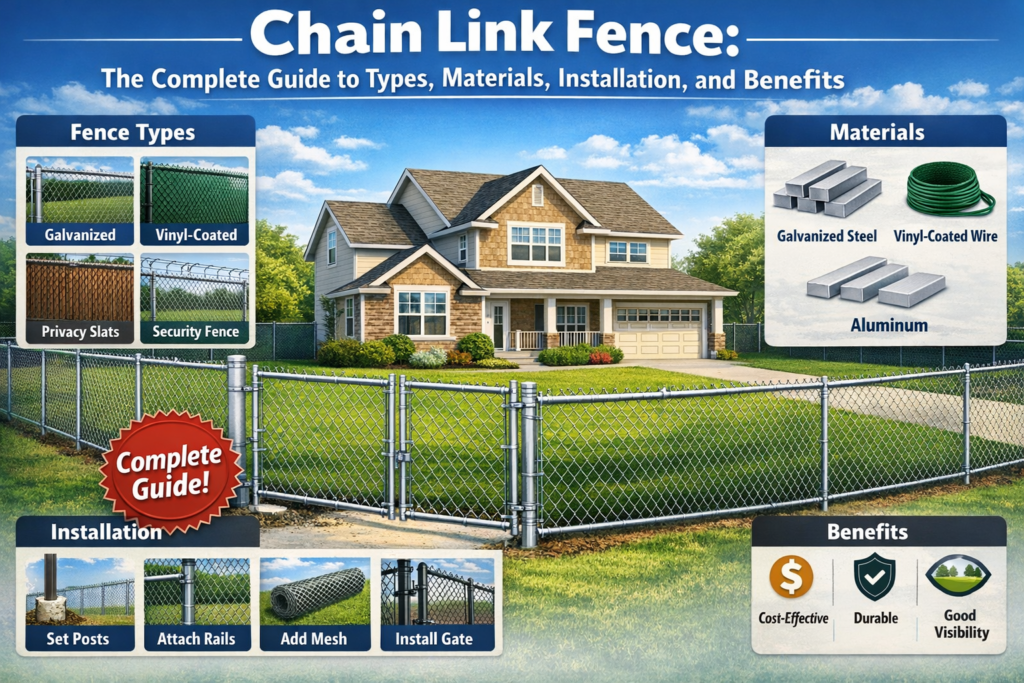
A chain link fence is one of the most versatile and widely used fencing solutions available. Known for its durability, affordability, and ease of installation, it is commonly used across residential yards, commercial properties, industrial facilities, sports fields, and security perimeters. Its diamond-shaped wire pattern provides strong boundary protection while maintaining visibility and airflow.
At Builtup Home, we highlight fencing solutions that combine security with practicality. This guide covers everything you need to know about chain link fencing, from its materials and types to installation, maintenance, benefits, and typical applications.
Types of Chain Link Fences
Chain link fences are available in several types to suit different applications. According to Builtup Home, understanding the options can help you choose the right fence for your property:
Galvanized Chain Link Fence
The most common type, made from zinc-coated steel wire, known for affordability, durability, and corrosion resistance.
PVC-Coated Chain Link Fence
This type has a protective vinyl or PVC layer over galvanized steel, improving durability and visual appeal. It’s often used in residential areas because it blends well with landscaping.
Privacy-Enhanced Chain Link Fence
Uses slats, screens, or fabric inserts between mesh diamonds to block visibility, providing added privacy for homes or businesses.
Security Chain Link Fence
Designed for high-security areas such as industrial sites, military zones, or prisons. Can include additional features like barbed wire or razor wire for extra protection.
Temporary Chain Link Fence
Portable fencing for construction sites, events, or public gatherings, easy to install and remove when needed.
Benefits of Chain Link Fencing
Builtup Home recommends chain link fencing for property owners because of its numerous advantages:
- Cost-Effective: Cheaper than wood, vinyl, or wrought iron, making it ideal for large areas.
- Durable and Long-Lasting: Can withstand heavy rain, wind, and snow; lifespan of 15–20 years or more.
- Low Maintenance: Requires minimal upkeep—periodic cleaning and inspections are sufficient.
- Fast Installation: Easy to unroll and stretch along the fence line.
- Good Visibility: Open mesh design allows monitoring and security surveillance.
- Wind Resistance: Air passes through the mesh, reducing wind damage compared with solid fences.
- Eco-Friendly: Often made from recycled steel and fully recyclable at the end of its lifespan.
Disadvantages of Chain Link Fencing
While practical, chain link fencing has a few limitations:
- Limited Privacy: The open mesh allows visibility; privacy slats are needed to block views.
- Less Decorative: Some homeowners prefer the appearance of wood or ornamental iron.
- Climb-Friendly Mesh: The diamond pattern may make it easier to climb than solid fences.
Chain Link Fence: Popular Applications
Chain link fencing is highly versatile. Builtup Home notes the following applications:
Residential Applications
- Garden boundaries
- Pet enclosures
- Vegetable or flower gardens
- Swimming pool safety
Commercial Properties
- Parking lots
- Warehouses
- Storage facilities
- Retail space perimeters
Industrial Sites
Used for perimeter security around factories, power plants, and distribution centers.
Public and Recreational Facilities
- Schools
- Public parks
- Playgrounds
- Sports complexes
- Tennis courts
These fences provide safety without obstructing visibility, making them ideal for monitoring and recreational spaces.
Chain Link Fence Installation Process
Builtup Home recommends the following steps for installation:
- Planning and Measurement: Measure the property boundary and plan gate locations and fence height.
- Marking the Fence Line: Use stakes and string to mark the installation path.
- Installing Fence Posts: Dig holes, place posts, and secure with concrete.
- Fitting the Upper Rails: Connect top rails between posts for structural stability.
- Installing the Mesh Fabric: Unroll and stretch the chain link fabric, securing it with tension bars and tie wires.
- Fitting Gates: Attach swing or sliding gates at designated posts for access.
How to Maintain Chain Link Fences
Chain link fences require minimal upkeep, but proper care extends their lifespan. Builtup Home recommends the following:
- Remove dirt and debris from the fence.
- Check for loose ties or damaged wires.
- Clear plants or vines growing on the mesh.
- Inspect for rust or corrosion.
- Repair damaged sections without replacing the entire fence.
Factors That Affect Chain Link Fence Cost
Several factors influence installation costs:
- Fence height
- Wire thickness (gauge)
- Total length of fencing
- Coating type (galvanized or vinyl)
- Number of gates
- Labor charges
Even with these variables, chain link fencing remains one of the most affordable fencing options, as noted by Builtup Home.
Chain Link Fence vs Other Fence Types
| Fence Type | Cost | Maintenance | Durability | Privacy |
| Chain Link | Low | Low | High | Low |
| Wood | Medium | High | Medium | High |
| Vinyl | High | Low | High | High |
| Wrought Iron | Very High | Medium | Very High | Medium |
Chain link fences are ideal for large properties or areas requiring visibility while staying cost-effective.
Conclusion
A chain link fence is a reliable, durable, and economical fencing solution suitable for a variety of environments. Its woven steel mesh ensures strong security while allowing visibility and airflow. With minimal maintenance and reasonable installation costs, chain link fencing remains one of the most popular fencing options worldwide.
Whether for residential, commercial, industrial, or recreational use, chain link fences provide long-lasting protection and clearly defined property boundaries. At Builtup Home, we recommend chain link fencing for those seeking a practical and durable solution for any property.
Frequently Asked Questions (FAQs)
1. What is a chain link fence?
According to Builtup Home, a chain link fence is a type of woven fence made from interlocking steel wires that form a diamond-shaped mesh pattern. It is widely used for security, property boundaries, and enclosures in residential, commercial, and industrial settings.
2. What is the lifespan of a chain link fence?
A properly installed chain link fence can last 15 to 25 years or more, depending on the material, coating, and maintenance. Builtup Home emphasizes that using galvanized or vinyl-coated steel can significantly extend its durability.
3. What materials are used to make chain link fences?
Most chain link fences are made from galvanized steel wire or vinyl-coated steel wire, which protect against rust and corrosion. Builtup Home notes that choosing the right material is key to ensuring long-term performance.
4. Is chain link fencing affordable?
Yes. Chain link fencing is among the most cost-effective fencing solutions, cheaper than wood, vinyl, or wrought iron, while still offering strong security. Builtup Home recommends it for large properties where budget and durability matter.
5. Do chain link fences offer privacy?
Standard chain link fences do not provide full privacy because of their open mesh design. However, privacy slats, screens, or fabric inserts can be added to block visibility. Builtup Home often suggests these enhancements for residential or commercial areas needing privacy.
6. How tall can a chain link fence be?
Chain link fences typically range from 3 feet to 12 feet in height, depending on the purpose. Residential fences are usually 4–6 feet tall, while security fences can exceed 10 feet. Builtup Home advises choosing the height based on your property’s safety requirements.
7. Are chain link fences easy to install?
Yes. Chain link fences are relatively easy and quick to install compared to many other fencing types. Professional installers can complete most installations efficiently. Builtup Home highlights that proper planning ensures a smooth setup process.
8. Do chain link fences require maintenance?
Chain link fences need very little upkeep. Occasional cleaning, rust checks, and tightening of ties are usually sufficient. Builtup Home recommends following simple upkeep practices to maximize fence longevity.
9. Can a chain link fence rust?
Galvanized or vinyl-coated fences are designed to resist rust, but if the protective coating is damaged, rust may appear over time. Builtup Home advises prompt repairs or re-coating to prevent corrosion.
10. Where are chain link fences commonly used?
Chain link fences are versatile and widely used in residential yards, schools, sports fields, construction sites, commercial properties, and industrial facilities. Builtup Home often recommends them for areas where security, visibility, and durability are important.