
By Builtup Home
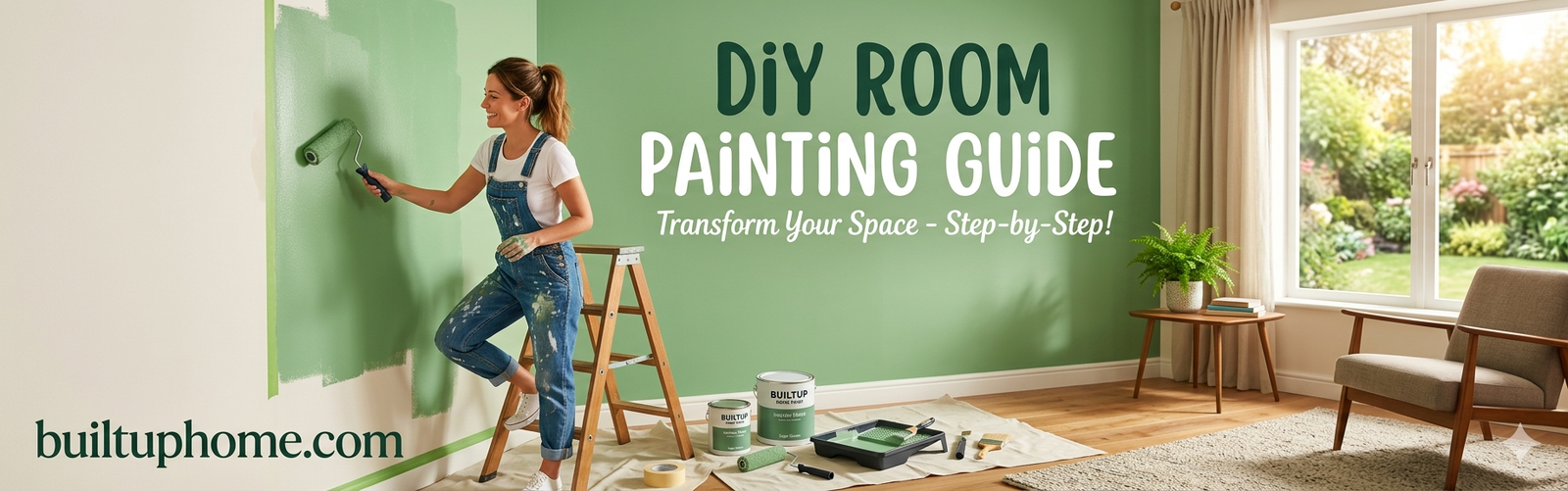
Painting a room yourself can be one of the most satisfying and budget-friendly ways to refresh your home. This DIY room painting guide will walk you through everything you need to know—from preparation to finishing touches—so you can achieve professional-looking results without hiring a painter.
Why Choose DIY Room Painting?
Taking on a painting project yourself offers several benefits:
- Saves money on labor costs
- Gives you full creative control
- Provides a sense of accomplishment
- Allows flexibility in timing
With the right approach, even beginners can paint like pros.
Tools and Materials You’ll Need
Before starting, gather these essentials:
- Paint (choose quality interior paint)
- Paint rollers and brushes
- Painter’s tape
- Drop cloths or plastic sheets
- Sandpaper
- Primer
- Paint tray
- Ladder (if needed)
Having everything ready will make the process smoother and faster.
Step 1: Prepare the Room
Preparation is the most important step in this DIY room painting guide.
- Remove furniture or cover it with sheets
- Clean the walls to remove dust and grease
- Fill cracks or holes with putty
- Sand rough surfaces for a smooth finish
- Apply painter’s tape to edges and trims
Proper preparation ensures better paint adhesion and a cleaner result.
Step 2: Choose the Right Paint
Selecting the right paint can make a big difference.
- Matte finish: Best for low-traffic areas
- Eggshell/Satin: Ideal for living rooms and bedrooms
- Semi-gloss/Gloss: Perfect for kitchens and bathrooms
Also, consider color psychology—lighter shades make rooms feel larger, while darker tones add coziness.
Step 3: Apply Primer
Primer helps:
- Cover stains
- Improve paint adhesion
- Enhance color vibrancy
Apply one coat of primer and let it dry completely before painting.
Step 4: Start Painting
Now comes the fun part!
- Start by cutting in edges with a brush
- Use a roller for larger areas
- Apply paint in “W” or “M” patterns for even coverage
- Let the first coat dry before applying the second
Two coats usually provide the best finish.
Step 5: Finishing Touches
After painting:
- Carefully remove painter’s tape
- Touch up any missed spots
- Clean brushes and rollers
- Allow walls to dry completely
Your room should now look fresh and professionally done.
Common Mistakes to Avoid
Even with a solid DIY room painting guide, mistakes can happen:
- Skipping surface preparation
- Using low-quality paint
- Applying thick coats
- Not allowing proper drying time
Avoiding these will improve your final results significantly.
Pro Tips for a Perfect Finish
- Paint during daylight for better color visibility
- Keep windows open for ventilation
- Use extension poles for ceilings
- Maintain a wet edge to avoid streaks
Conclusion
This DIY room painting guide by Builtup Home shows that transforming your space doesn’t have to be complicated or expensive. With the right tools, preparation, and techniques, you can achieve stunning results on your own.