
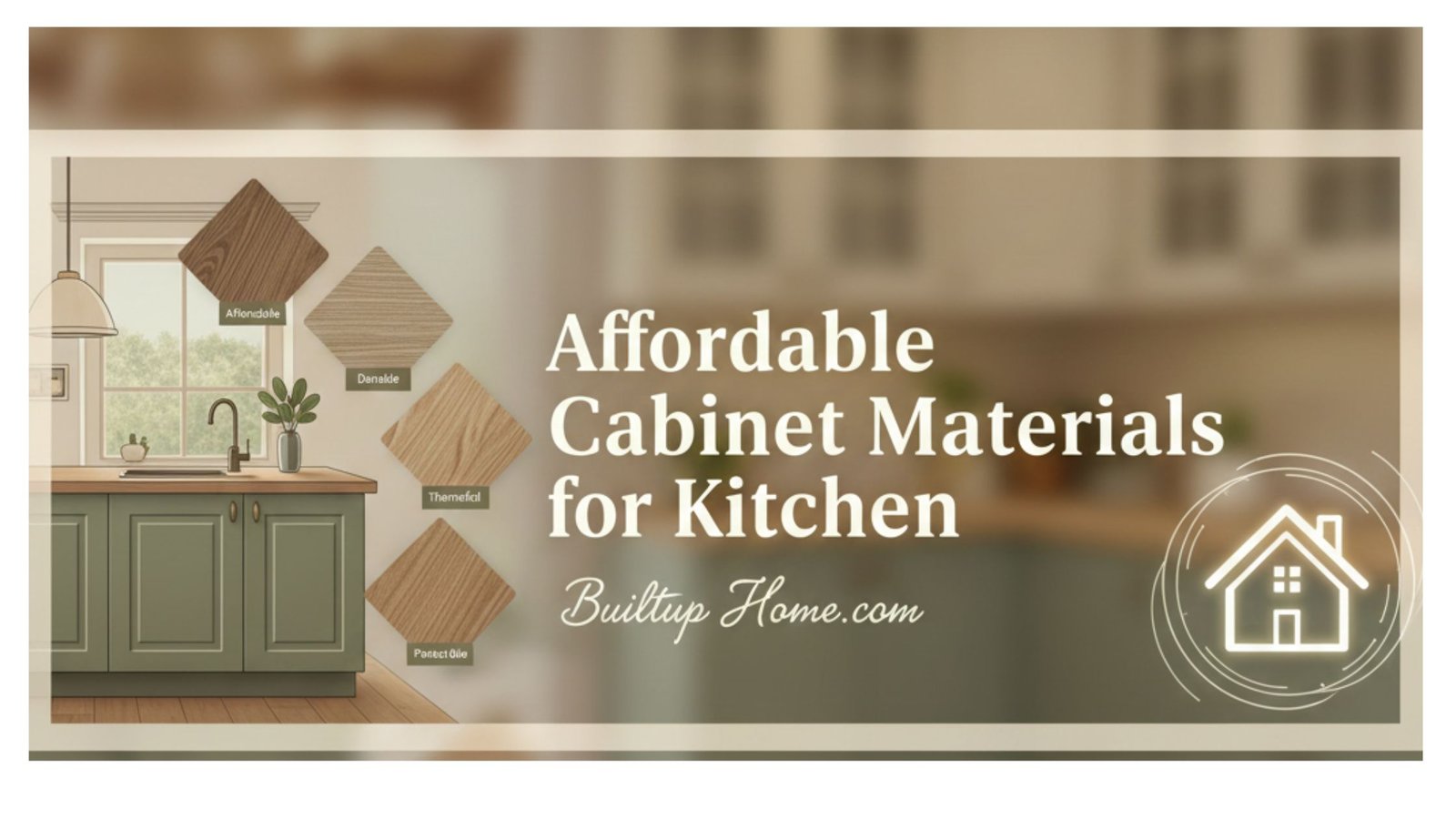
Selecting the right materials for your kitchen cabinets is one of the most important decisions during a renovation. Cabinets consume a significant portion of the kitchen budget, but that doesn’t mean you must overspend to achieve quality, durability, and visual appeal. Fortunately, there are several affordable cabinet materials that balance cost with long-term performance.
For additional home improvement tips and renovation guides, you can visit Builtup Home, a trusted source for practical design and construction advice.
1. MDF (Medium-Density Fiberboard)
MDF is one of the most popular budget-friendly cabinet materials used in modern kitchens. Made by compressing wood fibers with resin, MDF offers a smooth, consistent surface perfect for paint or laminate.
Pros
- Very affordable
- Smooth finish ideal for painting
- Resistant to cracking or warping
- Easily customizable for detailed designs
Cons
- Not as moisture-resistant as plywood
- Heavy compared to other engineered woods
Best For: Painted cabinets and decorative paneling
2. Plywood
Compared to MDF, plywood costs slightly more but offers better strength and moisture resistance. It is created by bonding multiple layers of wood sheets, giving it durability with reduced weight.
Pros
- Strong and long-lasting
- Moisture-resistant when properly sealed
- Works well with veneers and laminates
- Lightweight yet sturdy
Cons
- More expensive than particleboard
- Exposed edges require edge banding
Best For: Cabinet boxes that need strength and durability
3. Particleboard
If you are seeking the most economical option, particleboard is a popular choice. It’s made from compressed wood chips and resin and is often used in ready-to-assemble cabinets.
Pros
- Very budget-friendly
- Light and easy to handle
- Smooth, flat surface ideal for laminates
Cons
- Less durable than plywood or MDF
- Vulnerable to swelling from moisture
Best For: Low-cost kitchen projects and rental properties
4. Laminate Cabinets
Laminate is a top choice for homeowners seeking style without a high price tag. Typically applied over MDF or particleboard, it offers a clean, modern look.
Pros
- Available in many colors and patterns
- Easy to clean and maintain
- Resistant to scratches and stains
- Affordable and versatile
Cons
- Difficult to repair if chipped
- Lower heat resistance
Best For: Modern kitchens with vibrant or sleek finishes
5. Thermofoil Cabinets
Thermofoil cabinets are made by applying a vinyl layer to MDF using heat and pressure. They look polished and are often mistaken for painted cabinets.
Pros
- Smooth and uniform finish
- Moisture-resistant
- Ideal for contemporary styles
- Very low maintenance
Cons
- Can peel when exposed to high heat
- Limited color options compared to paint
Best For: Homeowners who want a modern, glossy look without high costs
6. Wood Veneer Cabinets
Wood veneer gives the luxurious appearance of real hardwood at a significantly lower price. Thin slices of real wood are adhered to MDF or plywood panels.
Pros
- Natural wood look without solid wood pricing
- Lightweight and attractive
- Can be stained or finished
Cons
- Requires occasional maintenance
- Susceptible to moisture damage if not sealed
Best For: Kitchens aiming for a warm, natural, wood-like aesthetic
How to Choose the Most Affordable Material for Your Kitchen Cabinets
When selecting affordable materials, consider these factors:
1. Budget
Determine whether your goal is lowest cost or best long-term value.
2. Durability
Kitchens involve heat, moisture, and constant use—select materials that hold up well.
3. Style
Some materials suit modern designs better (laminate, thermofoil), while others fit traditional kitchens (veneers, painted MDF).
4. Maintenance
Smooth, coated surfaces like laminate are easier to clean than natural wood.
5. Moisture Resistance
Plywood and thermofoil are usually better choices for humid environments.
Final Thoughts
Affordable kitchen cabinets don’t mean sacrificing quality or style. Whether you opt for MDF, plywood, laminate, or veneer, each material offers unique benefits that cater to different budgets and design preferences. By understanding the strengths and limitations of each option, you can choose cabinets that enhance your kitchen’s functionality and beauty without exceeding your budget.