
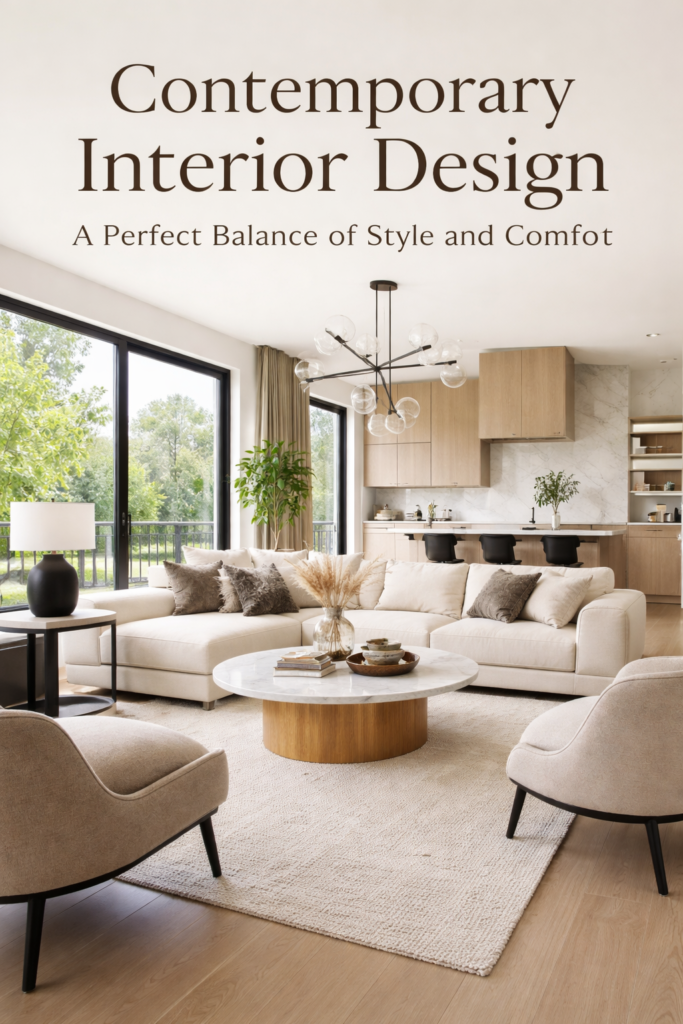
Contemporary interior design is one of the most popular styles for modern homes. It reflects what is current, fresh, and evolving in the world of design. Unlike traditional or historic styles, contemporary interiors adapt to changing trends while maintaining simplicity, elegance, and functionality.
If you’re planning to refresh your living space, understanding contemporary design can help you create a home that feels both stylish and welcoming. For more inspiration and evolving ideas, explore the latest interior design trends on Builtup Home.
What Is Contemporary Interior Design?
Contemporary interior design refers to the style that reflects the present moment. It constantly evolves, borrowing elements from modern, minimalist, and even industrial aesthetics. While modern design refers to a specific period (early to mid-20th century), contemporary design is fluid and ever-changing.
Key characteristics include:
- Clean lines
- Neutral color palettes
- Open spaces
- Natural light
- Minimal decorative elements
- Functional furniture
The goal is to create a space that feels uncluttered yet comfortable.
Key Elements of Contemporary Interior Design
1. Neutral Color Schemes
Contemporary spaces often use neutral tones such as white, beige, gray, and soft earth shades. These colors create a calm foundation and make rooms feel larger and brighter.
Accent colors—like navy blue, emerald green, or matte black—are often added through décor pieces, artwork, or furniture to create visual interest.
2. Clean Lines and Simple Forms
Furniture in contemporary design typically features sleek, straight lines and smooth surfaces. Ornate carvings and heavy detailing are avoided.
Sofas, chairs, and tables often have:
- Slim legs
- Low profiles
- Geometric shapes
This simplicity enhances the feeling of openness and order.
3. Open Floor Plans
Contemporary interiors favor open layouts that connect living, dining, and kitchen areas. This promotes:
- Better natural light flow
- Improved functionality
- A sense of spaciousness
Large windows, glass doors, and minimal partitions help achieve this seamless look.
4. Natural Materials and Textures
While the style is minimal, it is never cold or sterile. Contemporary design incorporates natural materials such as:
- Wood
- Stone
- Glass
- Metal
- Linen and cotton fabrics
Layering textures—like a soft rug over wooden flooring or a leather sofa with woven cushions—adds warmth and depth.
5. Statement Lighting
Lighting plays a crucial role in contemporary interiors. Instead of traditional chandeliers, you’ll often find:
- Sculptural pendant lights
- Recessed lighting
- Floor lamps with geometric designs
- LED strip lighting
Lighting is both functional and artistic, serving as a focal point in many rooms.
Contemporary Living Room Ideas
The living room is often the centerpiece of a contemporary home. To achieve the look:
- Choose a neutral sofa with clean lines
- Add a textured rug for warmth
- Incorporate abstract artwork
- Use a glass or metal coffee table
- Keep accessories minimal
Avoid overcrowding the space. Let each piece serve a purpose.
Contemporary Kitchen Design
A contemporary kitchen focuses on sleek cabinetry, handleless drawers, and clutter-free countertops. Popular features include:
- Quartz or marble countertops
- Matte or high-gloss cabinets
- Built-in appliances
- Minimal backsplash designs
Open shelving may be added, but it should remain tidy and intentional.
Contemporary Bedroom Styling
In the bedroom, comfort meets simplicity.
- Use soft neutral bedding
- Opt for a low-profile bed frame
- Add subtle lighting like bedside pendants
- Keep décor minimal and calming
The result is a serene retreat that promotes relaxation.
How Contemporary Design Differs from Modern Design
Many people confuse contemporary and modern styles. Here’s the difference:
| Modern Design | Contemporary Design |
| Specific historical period | Reflects current trends |
| Strict minimalism | Flexible and evolving |
| Limited color variation | Mix of neutrals and bold accents |
| Fixed characteristics | Adaptable style |
Contemporary design evolves with new materials, technologies, and preferences.
Benefits of Contemporary Interior Design
- Timeless Appeal – Its simplicity prevents it from looking outdated quickly.
- Functional Spaces – Focuses on usability and comfort.
- Easy Maintenance – Minimal décor means less clutter and easier cleaning.
- Adaptability – You can easily update the look with small changes.
Tips to Achieve Contemporary Interior Design
- Declutter regularly
- Stick to a cohesive color palette
- Invest in quality furniture
- Use art as a focal point
- Balance minimalism with warmth
- Incorporate natural light wherever possible
Even small adjustments can transform your space into a contemporary masterpiece.
Frequently Asked Questions
1. What defines contemporary interior design?
It is defined by clean lines, neutral tones, open spaces, and a focus on functionality while reflecting current design trends.
2. Can I mix contemporary design with other styles?
Yes. Contemporary design is flexible and blends well with modern, industrial, and even Scandinavian elements.
3. Is contemporary interior design expensive?
Not necessarily. You can achieve the look by focusing on simplicity, decluttering, and investing in a few quality pieces rather than many decorative items.
4. How can I make my home look more contemporary?
Use neutral colors, choose sleek furniture, improve lighting, and remove unnecessary décor.
Final Thoughts
Contemporary interior design is all about creating a harmonious balance between beauty and practicality. With its clean lines, neutral palettes, and evolving nature, it offers a versatile solution for modern living.
Whether you’re renovating your entire home or updating a single room, this style allows you to create a space that feels current, comfortable, and effortlessly elegant. For more ideas and expert insights, explore the latest interior design trends on Builtup Home and start transforming your home today.