
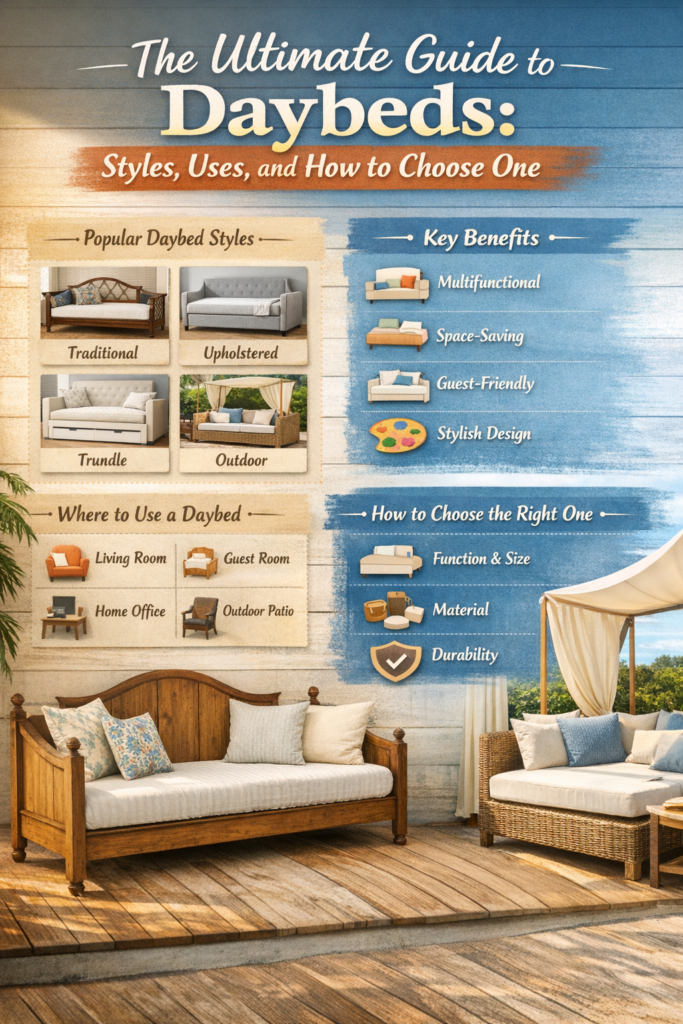
When it comes to versatile furniture that combines style, comfort, and functionality, few pieces can match a daybed. A daybed is a unique piece that functions as a sofa, lounge, and bed all in one, making it an excellent choice for small spaces, guest rooms, and even outdoor relaxation areas. In this guide, we’ll explore the history of daybeds, their different styles, materials, uses, and tips on how to choose the perfect one for your home.
What Is a Daybed?
A daybed is more than just a bed; it’s a multifunctional piece of furniture designed for both seating and sleeping. Unlike traditional beds, daybeds usually have a backrest and one or two side panels, giving them the appearance of a sofa while still being suitable for sleeping.
Daybeds are designed to provide comfort and flexibility. They can be used for lounging during the day, seating like a sofa, and sleeping at night or for short naps. Many modern designs also include features like pull-out trundle beds or built-in storage drawers, enhancing their functionality.
A Brief History of Daybeds
The concept of multifunctional furniture dates back centuries, but the modern daybed emerged as a solution for maximizing living spaces while combining comfort and style. Historically, beds and seating were separate, but homeowners and designers sought pieces that could serve multiple purposes.
Similar furniture has existed across cultures, such as the Polish bed, which often functioned as a curtained daybed. Over time, daybeds evolved to suit contemporary interiors, balancing practicality with aesthetic appeal.
Anatomy of a Daybed
A typical daybed consists of:
- Frame: Usually made of wood, metal, or upholstered materials.
- Mattress: Often a twin size, although larger options are available.
- Back and Side Panels: Provide support for sitting and lounging.
- Optional Features: These may include a trundle bed, storage drawers, or additional cushions for comfort.
The open front design allows for easy access and versatile use, whether sitting, reclining, or sleeping.
Types of Daybeds
Daybeds come in various styles to suit different spaces and preferences:
1. Traditional & Classic Daybeds
These daybeds feature ornate wooden or metal frames with elegant curves and detailing, perfect for classic or vintage interiors.
2. Upholstered Daybeds
Covered in fabrics like linen, velvet, or leather, these daybeds prioritize comfort and blend seamlessly into living rooms and lounges.
3. Metal Daybeds
Constructed from steel or iron, metal daybeds are durable, lightweight, and ideal for modern, industrial, or minimalist spaces.
4. Wooden Daybeds
Warm and sturdy, wooden daybeds suit traditional or rustic interiors and can last for decades with proper care.
5. Trundle Daybeds
Equipped with a pull-out bed underneath, trundle daybeds are perfect for guest rooms or children’s sleepovers.
6. Storage Daybeds
These include built-in drawers or shelves, making them a practical choice for small rooms and apartments.
7. Outdoor & Patio Daybeds
Designed with weather-resistant materials such as wicker, rattan, or synthetic fibers, outdoor daybeds are ideal for relaxation in patios, gardens, or poolside areas.
Materials & Construction
The choice of material affects both the look and durability of a daybed:
- Wood: Offers a timeless, classic aesthetic. Hardwoods like oak or walnut are particularly durable.
- Metal: Lightweight and sturdy, ideal for contemporary or minimalist interiors.
- Upholstery: Provides soft comfort and a variety of colors and textures.
- Wicker/Rattan: Often used for outdoor or casual styles, sometimes synthetic for weather resistance.
High-end daybeds may include intricate designs, colorful upholstery, or inlays for artistic appeal.
Where to Use a Daybed
Daybeds are versatile enough for almost any room:
- Living Room: Serves as a stylish alternative to a sofa while providing extra sleeping space.
- Guest Room: Perfect for accommodating visitors without taking up a full bedroom.
- Bedroom: Offers an additional lounging or sleeping option, particularly for children or small spaces.
- Home Office/Studio: Functions as seating during work hours and a rest spot when needed.
- Outdoor Spaces: Provides leisure seating and sunbathing options on patios, decks, or poolside areas.
How to Choose the Right Daybed
Selecting the perfect daybed involves considering your specific needs:
1. Functionality
Determine whether you need the daybed primarily for sitting, sleeping, or both. Consider trundle beds for extra sleeping capacity and storage models for space efficiency.
2. Size
Twin sizes are common, but full or queen-sized daybeds are available depending on the room dimensions and intended use.
3. Material
Select a material that complements the style and decor of your space:
- Wood for a traditional look
- Metal for modern or industrial vibes
- Upholstery for comfort and style flexibility
- Wicker/rattan for outdoor or casual decor
4. Durability
Look for a strong frame and quality construction to ensure long-lasting use.
5. Style Coordination
Match the daybed’s color, texture, and design with your existing furniture for a cohesive look.
Advantages of Daybeds
- Multifunctional: Serves as seating, lounging, and sleeping furniture.
- Space-Saving: Ideal for small apartments or rooms.
- Versatile Design: Fits both modern and classic interiors.
- Guest-Friendly: Provides extra sleeping arrangements without a dedicated spare room.
- Enhances Aesthetics: Adds style and elegance to your home décor.
Conclusion
A daybed is a practical and stylish solution for modern living spaces. Its multifunctionality allows it to serve as a sofa, lounge, and bed, making it perfect for small rooms, guest spaces, or outdoor relaxation areas. By choosing the right size, material, and style, a daybed can enhance both the comfort and visual appeal of any room. Whether used for everyday lounging or occasional overnight guests, a well-chosen daybed is a smart investment for functional and beautiful living.
FAQs About Daybeds
1. What is a daybed?
A daybed is a multifunctional piece of furniture that serves as a sofa, lounge, and bed. It usually has a back and side panels, making it suitable for sitting, reclining, and sleeping.
2. What are the benefits of a daybed?
Daybeds are versatile, space-saving, and stylish. They provide seating, sleeping space, and sometimes storage, making them ideal for small apartments, guest rooms, or outdoor spaces.
3. What types of daybeds are available?
Common types include:
- Traditional & Classic Daybeds
- Upholstered Daybeds
- Metal Daybeds
- Wooden Daybeds
- Trundle Daybeds
- Storage Daybeds
- Outdoor & Patio Daybeds
4. What size daybed should I choose?
Twin-size daybeds are the most common, but full and queen sizes are also available depending on room dimensions and intended use.
5. Can daybeds be used outdoors?
Yes, outdoor daybeds are designed with weather-resistant materials such as wicker, rattan, or synthetic fibers, making them perfect for patios and poolside relaxation.
6. Do daybeds come with storage options?
Many daybeds include built-in drawers or shelves, and some also feature a trundle bed for extra sleeping space.
7. How do I choose the right daybed for my space?
Consider functionality, size, material, durability, and design coordination with your existing furniture. Trundle or storage daybeds are ideal for maximizing space.