
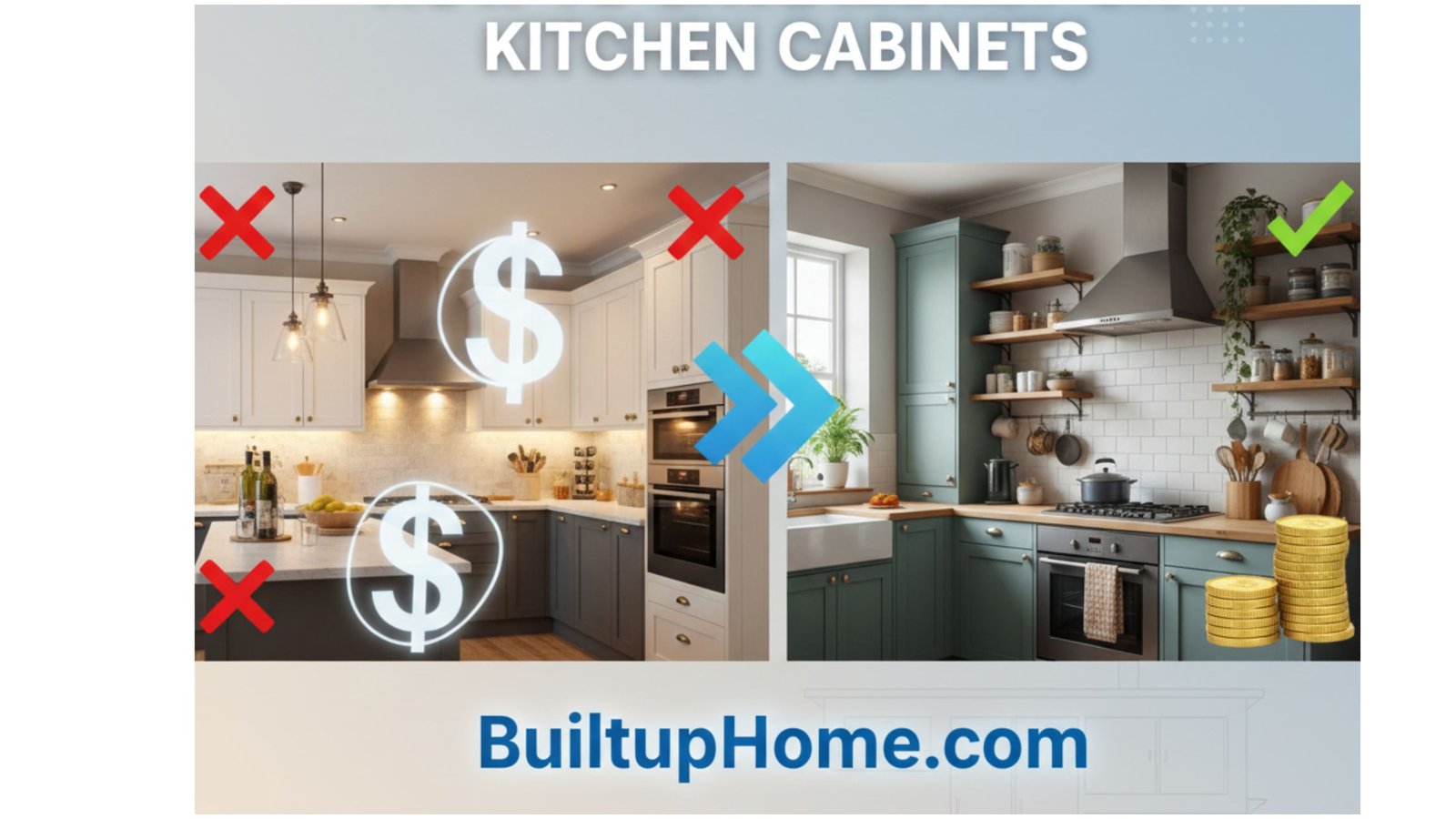
Kitchen cabinets are one of the most expensive components of any kitchen remodel. Whether you’re updating an outdated space or building a new kitchen from scratch, cabinets can easily consume a large portion of your budget. The good news? There are many smart ways to cut costs without sacrificing quality or style.
This guide breaks down the best strategies to help you save money on kitchen cabinets while still achieving a functional, beautiful kitchen. For more home improvement tips and budget-friendly ideas, you can explore Builtup Home—a helpful resource for homeowners and DIY enthusiasts.
1. Choose Stock Cabinets Over Custom
Custom cabinets are handmade to fit your space perfectly, but they also come with the highest price tag. If budget is a concern, consider:
- Stock cabinets — premade, affordable, and available at most home improvement stores
- Semi-custom cabinets — offer more style options but still cost less than fully custom designs
Many stock cabinet lines now offer modern designs, soft-close hinges, and high-quality finishes, making them an excellent value.
2. Refinish or Repaint Instead of Replacing
If your cabinet boxes are still in good condition, consider refinishing, repainting, or resurfacing them instead of buying new ones. This can save you 50–70% compared to replacement.
Options include:
- Sanding and painting
- Staining
- Applying new veneer
- Replacing only the doors
This approach dramatically changes the look of your kitchen at a fraction of the cost.
3. Mix and Match High-End With Budget-Friendly Pieces
You can achieve a designer look without paying a premium. Try mixing:
- Open shelves (affordable)
- Stock base cabinets (mid-priced)
- One or two custom pieces for unique areas (splurge)
Strategic blending helps stretch your budget while still capturing the style you want.
4. Opt for Open Shelving
Open shelving is significantly cheaper than upper cabinets and can create a spacious, modern look. It reduces material and labor costs, and installation is simpler.
Use it for:
- Everyday dishes
- Decorative accents
- Cookbooks
- Glassware
It’s an ideal way to save money while adding personality to your kitchen.
5. Skip Unnecessary Extras
Cabinet upgrades can add up quickly. To save money, consider limiting optional features like:
- Pull-out spice racks
- Built-in organizers
- Lazy susans
- Drawer dividers
- Glass doors
While useful, these add-ons elevate the cost. You can often buy aftermarket organizers later for much less.
6. Shop During Sales or Clearance Events
Home improvement stores regularly offer:
- Seasonal sales
- Holiday promotions
- Overstock clearance
- Scratch-and-dent deals
You can save hundreds—or even thousands—by timing your purchase right. Some stores also offer price matching, allowing you to get the best possible deal.
7. Consider Ready-to-Assemble (RTA) Cabinets
Ready-to-assemble cabinets come flat-packed and require at-home assembly. They cost significantly less than preassembled options and come in a variety of materials and finishes.
Benefits include:
- Lower shipping costs
- DIY-friendly installation
- Wide style selection
If you’re comfortable assembling them, RTA cabinets are one of the most budget-friendly options available.
8. Install Cabinets Yourself
Labor can be one of the biggest expenses. If you’re handy with tools, consider installing the cabinets yourself or hiring a local handyman instead of a contractor.
Even partial DIY work—like removing old cabinets yourself—can save serious money.
9. Reuse Hardware or Buy Budget Replacements
Cabinet hardware (handles, pulls, knobs) may seem inexpensive, but upgrading every piece adds up fast. To save money:
- Keep your existing hardware
- Refinish metal knobs with spray paint
- Buy affordable sets in bulk online
Small savings add up quickly during a full remodel.
10. Plan Ahead and Avoid Last-Minute Changes
Changes in layout, measurements, or design after ordering cabinets can dramatically increase costs. Avoid surprises by:
- Measuring carefully
- Planning final layouts before buying
- Consulting with professionals when needed
Good planning ensures you buy exactly what you need—nothing more.
Final Thoughts
Saving money on kitchen cabinets doesn’t mean sacrificing quality or style. By choosing cost-effective materials, considering refinishing options, mixing budget selections with a few upgrades, and planning carefully, you can revitalize your kitchen without overspending.