
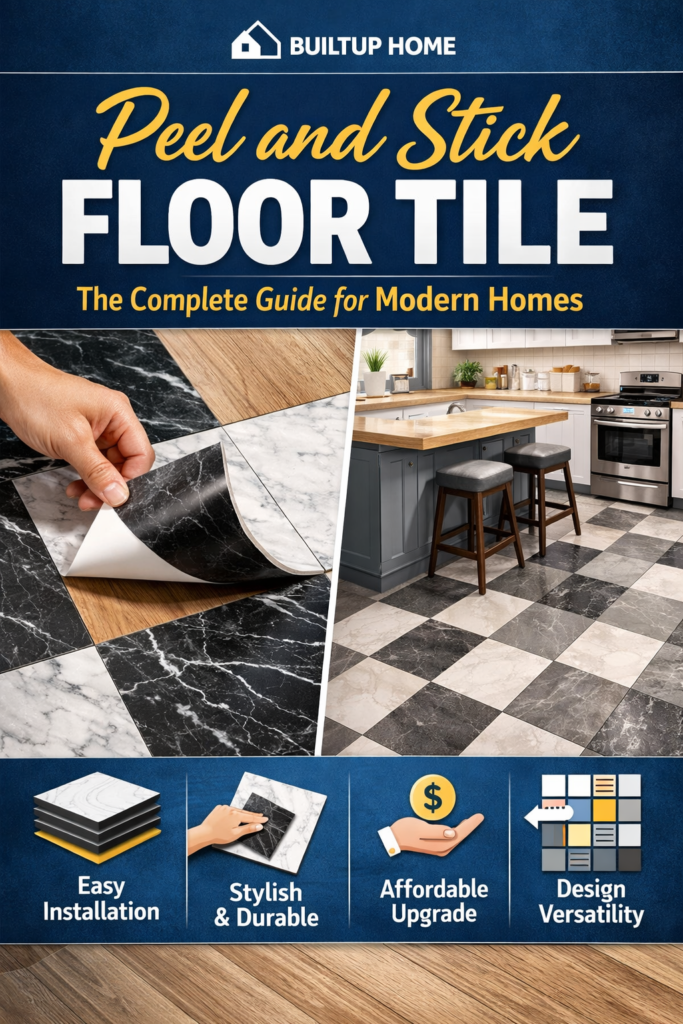
Flooring plays a crucial role in the overall design, comfort, and functionality of any home. However, traditional flooring options such as hardwood, ceramic tile, or natural stone often require professional installation, significant time, and a large budget. For homeowners looking for a quicker and more affordable solution, peel and stick floor tiles have emerged as a highly practical alternative.
These self-adhesive tiles allow homeowners and DIY enthusiasts to upgrade their floors with minimal tools and effort. Whether you want to renovate a kitchen, refresh a bathroom, or add style to a bedroom, peel and stick flooring offers a convenient and attractive solution.
In this in-depth guide from Builtup Home, we will explore everything you need to know about peel and stick floor tiles, including their benefits, types, installation process, maintenance tips, design ideas, and whether they are the right flooring choice for your home.
What Are Peel and Stick Floor Tiles?
Peel and stick floor tiles are self-adhesive flooring tiles that can be installed without the need for glue, grout, nails, or special equipment. Each tile comes with a protective backing layer. Once the backing is peeled off, the tile can be pressed directly onto the floor surface.
Most peel and stick tiles are made from vinyl or luxury vinyl materials, which provide durability, flexibility, and resistance to moisture. These tiles are designed to mimic the appearance of premium flooring materials such as hardwood, ceramic tile, marble, or stone.
Because of their convenience and affordability, peel and stick tiles are commonly used in DIY home improvement projects. They are particularly popular among homeowners who want a quick upgrade and renters who need a temporary flooring solution.
Why Peel and Stick Floor Tiles Are Becoming So Popular
Over the past decade, peel and stick flooring has gained tremendous popularity. Improvements in manufacturing technology have made these tiles more durable, stylish, and realistic than ever before.
Several factors contribute to their growing demand.
Easy DIY Installation
One of the biggest advantages of peel and stick floor tiles is their simple installation process. Unlike traditional flooring systems that require adhesives or grout, these tiles only need to be peeled and pressed into place.
Even someone with little or no renovation experience can install them successfully.
Budget-Friendly Flooring
Traditional flooring options can be expensive when you consider material costs, installation fees, and labor charges. Peel and stick tiles are significantly more affordable, making them a great choice for homeowners on a tight budget.
Because installation does not require professional help, homeowners can also save a substantial amount on labor costs.
Wide Range of Designs
Peel and stick tiles are available in countless colors, textures, and patterns. Many designs replicate the appearance of premium materials so realistically that it is difficult to tell the difference.
Popular design styles include:
- Wood plank designs that resemble hardwood flooring
- Marble patterns for elegant interiors
- Stone textures for rustic spaces
- Modern geometric patterns
- Vintage or retro tile designs
This wide variety allows homeowners to match the flooring with their existing décor and interior design style.
Quick Home Renovations
Another reason for their popularity is the speed of installation. Traditional flooring renovations can take several days or even weeks to complete. Peel and stick flooring allows homeowners to transform a room in just a few hours.
This makes them ideal for quick home upgrades before selling a property or preparing a rental unit.
Rental-Friendly Option
Many renters want to personalize their living spaces but cannot make permanent modifications. Peel and stick floor tiles provide a removable and temporary flooring option that can often be taken up without damaging the original floor underneath.
Types of Peel and Stick Floor Tiles
Peel and stick floor tiles come in several materials and formats. Each type offers unique features, advantages, and specific uses depending on the space and needs.
Vinyl Peel and Stick Tiles
Vinyl tiles are the most common and affordable type of peel and stick flooring. They are lightweight, highly flexible, and come in a wide variety of colors and design patterns.
These tiles are suitable for areas such as bedrooms, living rooms, and kitchens.
Luxury Vinyl Tiles (LVT)
Luxury vinyl tiles are a premium version of standard vinyl tiles. They are thicker, more durable, and designed to replicate natural materials more realistically.
LVT flooring often includes textured surfaces that resemble wood grain or stone patterns.
Stone Composite Tiles
Some modern peel and stick tiles are made with stone composite materials. These tiles combine vinyl with stone powder to increase strength and durability.
They are generally more resistant to wear and can handle moderate foot traffic.
Foam-Backed Tiles
Foam-backed peel and stick tiles include a cushioning layer that provides extra comfort underfoot. They also help reduce noise and improve insulation.
These tiles are commonly used in bedrooms and home offices.
Advantages of Peel and Stick Floor Tiles
Peel and stick tiles offer numerous advantages that make them appealing to homeowners and DIY enthusiasts.
Affordable Flooring Solution
One of the biggest advantages is affordability. Compared to hardwood or ceramic tiles, peel and stick flooring is much cheaper, making it accessible to homeowners with limited renovation budgets.
Minimal Tools Required
Installing peel and stick tiles requires only a few basic tools, such as:
- Measuring tape
- Utility knife
- Straight edge
- Pencil or chalk line
This simplicity makes the installation process accessible to beginners.
Fast Installation
Because the tiles come with pre-applied adhesive backing, installation is quick and straightforward. Most rooms can be finished within just one day.
Easy Tile Replacement
If a tile becomes damaged or stained, it can be removed and replaced individually. This eliminates the need to replace the entire floor.
Water and Stain Resistance
Vinyl-based peel and stick tiles are naturally resistant to moisture and stains. This makes them suitable for kitchens, laundry rooms, and other areas that may experience occasional spills.
Disadvantages of Peel and Stick Floor Tiles
Despite their many benefits, peel and stick floor tiles also have some limitations that homeowners should consider.
Limited Lifespan
Compared to traditional flooring materials, peel and stick tiles typically have a shorter lifespan. Depending on the quality of the tiles and the level of foot traffic, they may last between 5 and 10 years.
Surface Preparation Is Essential
The success of peel and stick flooring depends heavily on the condition of the subfloor. Uneven, dirty, or damaged surfaces can prevent the tiles from adhering properly.
Less Durable Than Traditional Flooring
Because peel and stick tiles are relatively thin, they may be more susceptible to scratches, dents, or lifting edges over time.
Moisture Sensitivity
While most peel and stick tiles are water-resistant, they are not fully waterproof. Excess moisture or standing water can weaken the adhesive and cause the tiles to loosen.
Best Places to Use Peel and Stick Floor Tiles
Peel and stick flooring works best in low to moderate traffic areas of the home.
Recommended locations include:
- Bedrooms
- Home offices
- Laundry rooms
- Kitchens
- Small bathrooms
- Basements
However, they may not perform well in high-traffic spaces such as entryways or large living rooms.
Step-by-Step Guide to Installing Peel and Stick Floor Tiles
Proper installation is essential for achieving a professional-looking finish.
Step 1: Prepare the Subfloor
The floor must be clean, dry, and smooth before installing the tiles. Remove dust, dirt, grease, and debris.
Step 2: Measure the Room
Use a measuring tape to determine the dimensions of the room and calculate how many tiles you will need.
Step 3: Plan the Layout
Mark the center of the room and create guidelines using chalk lines. Starting from the center ensures a balanced and symmetrical design.
Step 4: Peel the Backing
Remove the protective backing from the tile to expose the adhesive.
Step 5: Apply the Tile
Carefully position the tile and press it firmly onto the floor surface. Smooth out any air bubbles.
Step 6: Cut Tiles for Edges
Use a utility knife to trim tiles to fit around walls, corners, or obstacles.
Step 7: Roll the Floor
Using a floor roller or heavy object helps ensure the adhesive bonds properly with the floor.
Maintenance and Care Tips
Maintaining peel and stick flooring is simple and requires minimal effort.
To keep your floors looking their best:
- Sweep or vacuum regularly to remove dirt and debris
- Use a damp mop for cleaning instead of excessive water
- Avoid harsh chemicals that may damage the tile surface
- Place protective pads under heavy furniture
- Replace damaged tiles promptly
With proper care, peel and stick flooring can maintain its appearance for many years.
Design Ideas for Peel and Stick Flooring
Peel and stick tiles provide endless opportunities for creative interior design.
Wood-Look Flooring
Wood-look peel and stick tiles can create the warmth and elegance of hardwood flooring without the high cost.
Marble-Style Tiles
Marble patterns add sophistication and luxury to kitchens and bathrooms.
Geometric Patterns
Modern geometric tile designs are perfect for contemporary homes and stylish interiors.
Vintage Tile Designs
Retro patterns can give kitchens, entryways, and bathrooms a charming vintage feel.
Are Peel and Stick Floor Tiles Worth It?
Peel and stick floor tiles are an excellent choice for homeowners who want a quick, affordable, and stylish flooring solution. While they may not match the durability of traditional flooring materials, they provide an easy way to refresh a room without major renovation work.
For DIY enthusiasts, renters, or homeowners working with a limited budget, peel and stick tiles offer a practical and attractive flooring option.
Final Thoughts
Peel and stick floor tiles have revolutionized DIY flooring by making home renovation faster, easier, and more affordable. Their simple installation process, wide range of designs, and budget-friendly pricing make them a popular choice for modern homes.
Although they may not last as long as hardwood or ceramic flooring, peel and stick tiles are ideal for quick upgrades, temporary solutions, and creative interior projects.
At Builtup Home, we believe peel and stick flooring is one of the most accessible ways to transform your living space and give your home a fresh new look without the complexity of traditional renovation.