
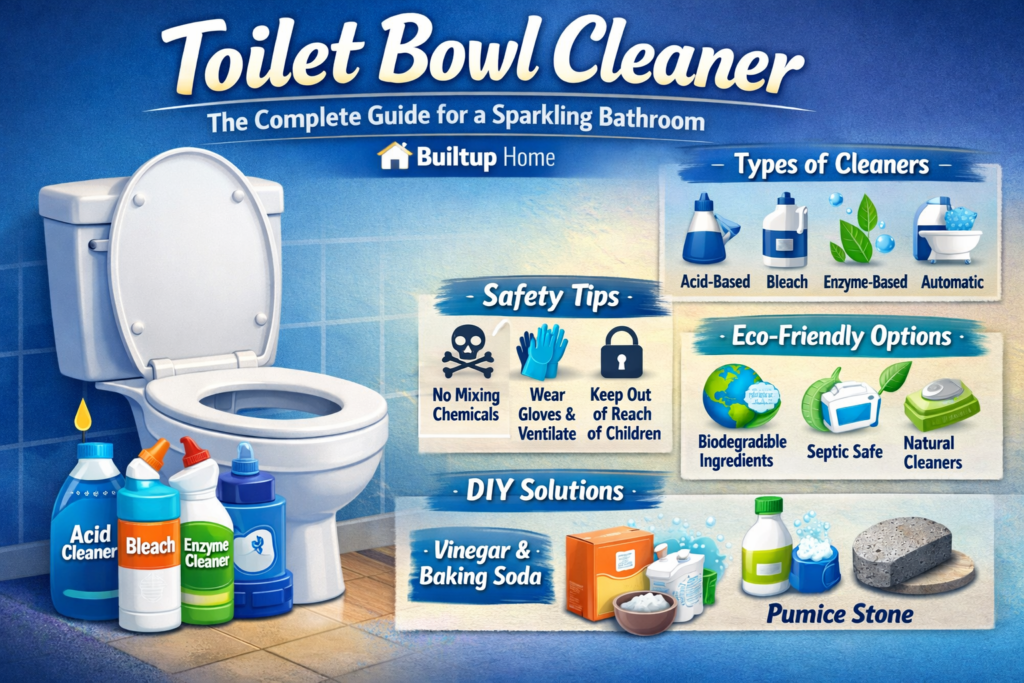
A clean toilet isn’t just about aesthetics—it’s essential for hygiene, comfort, and overall bathroom health. However, not all toilet bowl cleaners are created equal. From tough stains to lingering odors, the right cleaner can make all the difference. In this comprehensive guide, Builtup Home explores everything you need to know about toilet bowl cleaners, including their types, ingredients, safety tips, environmental impact, and how to choose the best one for your home.
What Is a Toilet Bowl Cleaner?
A toilet bowl cleaner is a chemical or natural product designed to remove stains, bacteria, and mineral buildup from the toilet bowl. These products work by breaking down grime, disinfecting surfaces, and leaving your bathroom fresh and clean. Modern cleaners are available in various forms, including:
- Liquid gels
- Powdered tablets
- Creams
- Automatic toilet cleaning systems
Each form has its benefits, depending on your cleaning preferences and bathroom needs.
How Toilet Bowl Cleaners Work
Toilet cleaners work through chemical reactions or natural enzymes that dissolve stains and fight germs. Here’s a breakdown of the most common types:
1. Acid-Based Cleaners
Acid-based cleaners use chemicals like hydrochloric acid or phosphoric acid to dissolve hard water stains, rust, and mineral deposits. They are highly effective for stubborn stains but require careful handling.
2. Bleach and Disinfectant Cleaners
These cleaners often contain sodium hypochlorite (bleach), which whitens stains, kills bacteria, and eliminates odors. Bleach-based cleaners are ideal for regular disinfection but can emit strong fumes.
3. Enzyme and Oxygen-Based Cleaners
Eco-friendly options use enzymes or oxygen-based compounds to naturally break down organic waste. They are gentle on pipes and septic systems while still effectively cleaning the toilet.
4. Automatic Toilet Cleaners
These products slowly release cleaning agents and fragrance with every flush. While convenient, they often provide light cleaning and still require occasional manual scrubbing.
Common Ingredients in Toilet Bowl Cleaners
| Ingredient Type | Purpose | Notes |
| Acids (HCl, phosphoric, citric) | Dissolve mineral deposits | Strong acids clean quickly but require gloves and ventilation |
| Bleach (Sodium Hypochlorite) | Disinfect & whiten | Effective but can irritate skin and lungs |
| Surfactants & Detergents | Lift dirt and stains | Helps gel cleaners cling to surfaces |
| Enzymes | Break down organic waste | Eco-friendly and safe for septic tanks |
| Fragrance & Dyes | Mask odors and enhance appearance | May irritate sensitive users |
Best Practices for Using Toilet Bowl Cleaners
Using your cleaner effectively ensures maximum hygiene:
- Apply under the rim: Target areas where stains and bacteria accumulate.
- Let it sit: Allow the cleaner to act for 5–10 minutes, or as instructed.
- Scrub if needed: Use a toilet brush to remove stubborn stains.
- Flush thoroughly: Rinse away chemicals and loosened debris.
- Safety first: Use protective gloves and keep the area well-ventilated.
Safety Tips
Toilet bowl cleaners are effective, but misuse can be dangerous.
- Avoid mixing chemicals: Never combine bleach with ammonia or other acids; toxic gases can form.
- Protect yourself: Gloves and eye protection prevent skin irritation and accidental splashes.
- Keep away from pets and children: Store cleaners securely and always close the toilet lid.
Environmental Considerations
Many conventional cleaners contain harsh chemicals that can impact waterways and aquatic life. Eco-friendly alternatives use natural acids, biodegradable surfactants, and enzymes to reduce environmental harm. When choosing a cleaner, consider:
- Septic-safe formulas
- Biodegradable ingredients
- Concentrated options that reduce packaging waste
Choosing greener alternatives keeps your bathroom clean while protecting the planet.
Choosing the Right Cleaner for Your Home
Your choice depends on the type of cleaning needed:
| Situation | Recommended Cleaner |
| Heavy stains / hard water | Acid-based gel |
| Daily disinfection | Bleach or antibacterial gel |
| Pets or children | Enzyme-based or plant-based cleaners |
| Septic systems | Eco-friendly, biodegradable cleaners |
| Sensitive indoor air | Fragrance-free formulas |
DIY and Natural Cleaning Alternatives
If you prefer chemical-free cleaning, several DIY solutions are effective:
- Vinegar + Baking Soda: A natural combination that foams to lift grime.
- Pumice Stone: Removes hard water rings and mineral deposits without chemicals.
These methods may require more elbow grease but are safe for households with children, pets, or septic systems.
Conclusion
A clean toilet is essential for a healthy home, but selecting the right toilet bowl cleaner is just as important. Understanding the types, ingredients, safety precautions, and environmental impacts of these products empowers you to make smarter choices. Whether you prefer traditional chemical cleaners or eco-friendly alternatives, following the right cleaning practices ensures a sparkling, hygienic bathroom for your family.
With this guide, Builtup Home equips you to maintain your bathroom with confidence, safety, and sustainability in mind.