
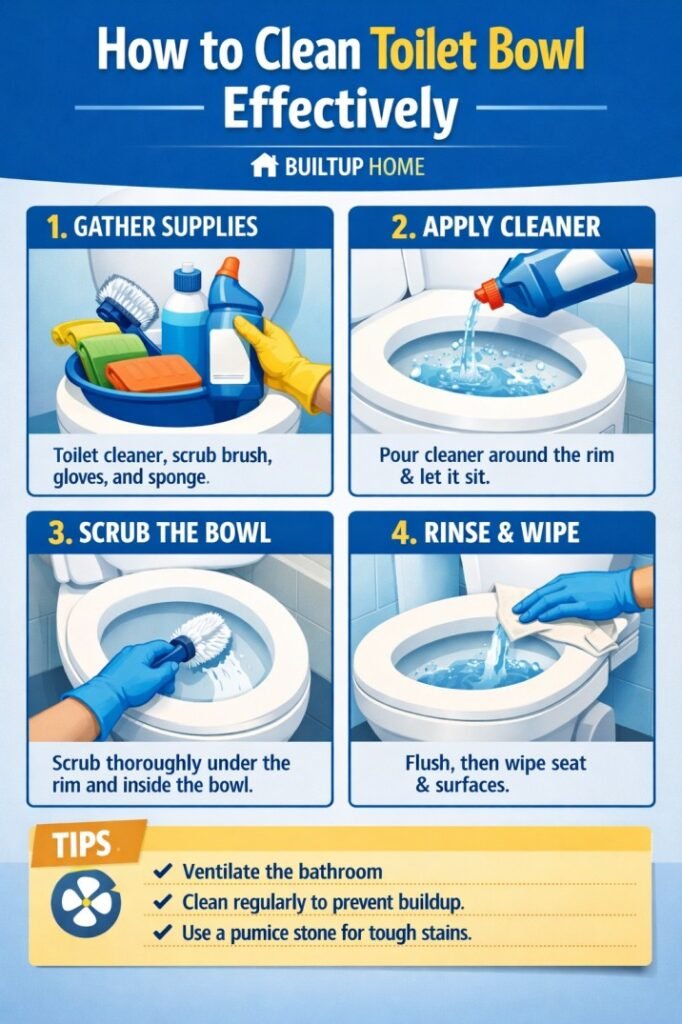
A clean toilet bowl is essential for a hygienic and fresh-smelling bathroom. Over time, toilets collect stains, germs, limescale, and bacteria, which can make them look dirty and unsafe. The good news is that with the right method and routine, you can keep your toilet sparkling clean with minimal effort.
In this guide from Builtup Home, you’ll learn a complete, research-based, step-by-step method to clean your toilet bowl effectively using both chemical and natural solutions.
Why Regular Toilet Cleaning Is Important
Your toilet is one of the most bacteria-prone areas in the home. Studies show that germs can survive on toilet surfaces for hours or even days depending on conditions. That’s why regular cleaning is important for:
- Preventing bad odors
- Removing tough stains and mineral buildup
- Killing harmful bacteria and viruses
- Maintaining a fresh bathroom environment
- Improving overall home hygiene
Experts recommend cleaning your toilet at least once a week, and more often if heavily used or during illness in the household.
Essential Tools You Need
Before starting, gather these cleaning supplies:
- Toilet brush
- Rubber gloves
- Toilet bowl cleaner or bleach
- Disinfectant spray
- Microfiber cloth or sponge
- Baking soda (optional for natural cleaning)
- White vinegar (optional eco-friendly option)
Step-by-Step: How to Clean Toilet Bowl Effectively
1. Prepare the Area
Put on gloves and remove any items around the toilet. This keeps the area safe and allows easy access to all surfaces.
2. Apply Toilet Bowl Cleaner
Lift the toilet seat and apply a generous amount of cleaner under the rim and around the inside of the bowl. Make sure it coats all stained areas.
👉 Let it sit for 5–10 minutes so the solution can break down dirt and kill bacteria.
(Experts emphasize that leaving disinfectant for proper “contact time” increases effectiveness.)
3. Scrub the Bowl Thoroughly
Using a toilet brush:
- Scrub under the rim
- Clean the waterline
- Reach deep inside the bowl
- Focus on visible stains or yellow marks
Apply more pressure on tough stains if needed.
4. Clean Stubborn Stains (Optional Deep Cleaning)
If stains remain:
- Sprinkle baking soda inside the bowl
- Add white vinegar
- Let it fizz for a few minutes
- Scrub again with the brush
This natural method helps remove hard water stains and mineral deposits effectively.
5. Flush the Toilet
Once scrubbing is complete, flush the toilet to rinse away dirt and cleaning solution. Repeat if necessary for heavily stained bowls.
6. Clean the Toilet Exterior
Many people forget this step, but the outside is just as important:
- Spray disinfectant on tank, seat, lid, and base
- Wipe with a microfiber cloth
- Pay attention to hinges and hidden corners
This helps eliminate germs and fingerprints.
7. Disinfect the Brush and Tools
After cleaning:
- Rinse the toilet brush with hot water
- Spray with disinfectant or bleach solution
- Let it dry properly before storing
This prevents bacteria buildup on cleaning tools.
Natural Toilet Cleaning Alternative
If you prefer chemical-free cleaning, try this:
- Pour 1 cup of vinegar into the bowl
- Add baking soda
- Let it sit for 10–15 minutes
- Scrub and flush
This method is eco-friendly and effective for light stains and odors.
Common Mistakes to Avoid
Many people make these errors when cleaning toilets:
- Not letting cleaners sit long enough
- Using too little product
- Ignoring the rim area
- Forgetting the outside surfaces
- Mixing cleaning chemicals (dangerous fumes risk)
Avoiding these mistakes improves cleaning results significantly.
How Often Should You Clean a Toilet?
- Light cleaning: every 2–3 days
- Deep cleaning: once a week
- Extra cleaning: after illness or heavy use
Consistency is the key to maintaining hygiene and preventing buildup.
Final Thoughts
Cleaning a toilet bowl effectively is not difficult when you follow the right steps. By combining proper disinfectants, scrubbing techniques, and regular maintenance, you can keep your bathroom clean, fresh, and germ-free.
At Builtup Home, we believe a clean home starts with simple habits—and toilet hygiene is one of the most important.