
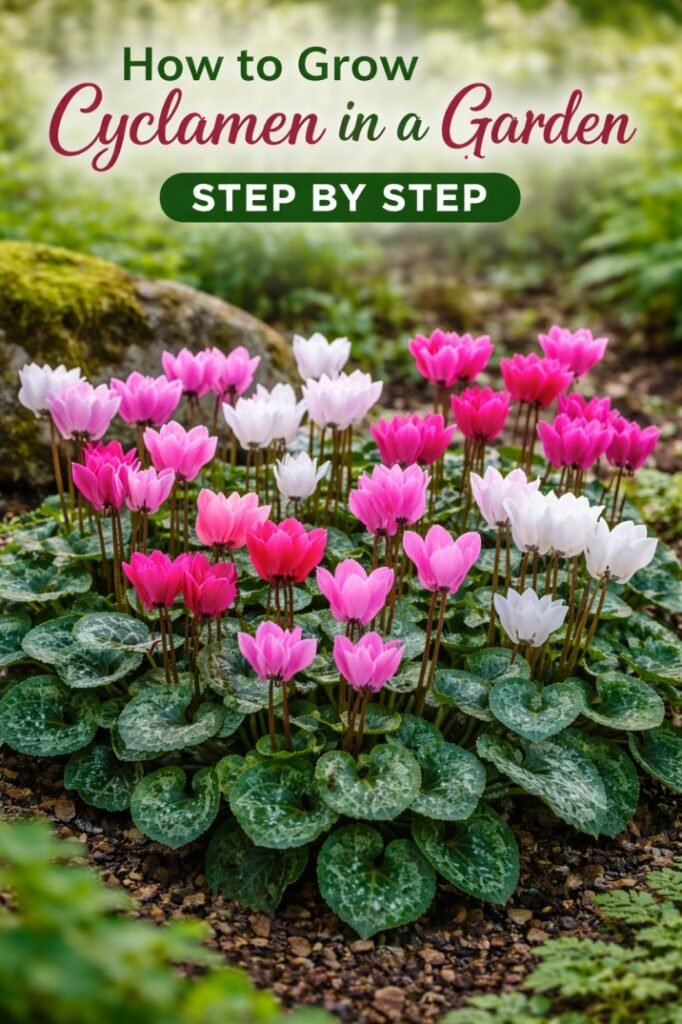
Cyclamen are among the most charming flowering plants you can grow in a garden, especially if you want color during the cooler months when most plants go quiet. Their delicate, upswept petals and beautifully patterned leaves make them a standout addition to shaded spaces. Despite their elegant appearance, cyclamen are surprisingly hardy and easy to grow once you understand their natural rhythm.
In this detailed guide by Builtup Home, you’ll learn exactly how to grow cyclamen in your garden step by step—from choosing the right variety to long-term care and maintenance.
🌿 Understanding Cyclamen: A Quick Overview
Cyclamen are tuberous perennials, meaning they grow from a round underground structure called a tuber. Native to Mediterranean climates, they thrive in cool, moist conditions and naturally grow in woodland areas.
What makes cyclamen unique is their seasonal cycle:
- They grow and bloom during cool months (autumn to spring)
- They go dormant during hot summer months
This opposite growth pattern compared to many garden plants is key to caring for them successfully.
🌱 Step 1: Choose the Right Cyclamen Variety
The first step is selecting a variety suitable for outdoor gardening. Not all cyclamen types perform well outside.
Best garden varieties:
- Cyclamen hederifolium – blooms in autumn, very hardy
- Cyclamen coum – blooms in winter, excellent for colder climates
Avoid for outdoor planting:
- Cyclamen persicum (commonly sold indoors) unless you live in a mild climate
Choosing the right variety ensures better survival, stronger growth, and more consistent flowering.
🌤️ Step 2: Pick the Ideal Location
Cyclamen naturally grow under trees and in shaded woodland environments. Mimicking this setting in your garden will give the best results.
Ideal conditions:
- Partial to full shade
- Cool and sheltered areas
- Under trees, shrubs, or along shaded borders
They prefer locations that stay cool in summer and slightly moist in winter.
Avoid:
- Direct, intense sunlight
- Open, exposed areas
- Places where water collects
A shaded garden corner is usually perfect.
🌾 Step 3: Prepare the Soil Properly
Soil quality plays a huge role in cyclamen success. The most important factor is drainage.
Soil requirements:
- Well-draining soil (essential to prevent rot)
- Slightly acidic to neutral pH
- Rich in organic matter
How to prepare:
- Mix compost or leaf mold into the soil
- Add sand or grit if soil is heavy or clay-like
Good soil preparation helps tubers establish quickly and prevents common problems like rotting.
🌰 Step 4: Plant Cyclamen Tubers Correctly
Cyclamen are typically planted from tubers rather than seeds because it’s faster and more reliable.
Step-by-step planting:
- Dig small holes about 5–8 cm deep
- Space each tuber 10–15 cm apart
- Place the tuber with the flat side facing down
- Cover lightly with soil (don’t bury too deep)
- Water gently after planting
Planting depth matters—too deep and the plant may struggle to grow.
💧 Step 5: Watering the Right Way
Cyclamen need a balance: not too dry, not too wet.
Watering tips:
- Keep soil slightly moist during the growing season
- Water when the top layer feels dry
- Avoid soaking the soil
Important:
- Reduce watering significantly during summer dormancy
- Never let water sit around the tuber
Overwatering is one of the most common mistakes and can quickly kill the plant.
🌸 Step 6: Understand the Seasonal Growth Cycle
Cyclamen follow a natural rhythm that’s different from many garden plants.
Active phase (Autumn to Spring):
- Leaves appear
- Flowers bloom
- Regular watering and care needed
Dormant phase (Summer):
- Leaves turn yellow and die back
- Plant rests underground
- Minimal or no watering required
This dormancy is completely normal—don’t mistake it for a dying plant.
🌿 Step 7: Fertilize for Better Blooms
Cyclamen benefit from light feeding during their active growth period.
Fertilizing guide:
- Use a balanced liquid fertilizer
- Apply every 3–4 weeks
- Feed only during growing season
Avoid excessive fertilizer, as it can harm the plant instead of helping it.
🍂 Step 8: Mulching and Protection
Adding mulch helps maintain a stable environment for your cyclamen.
Benefits of mulching:
- Retains moisture
- Keeps soil cool
- Protects tubers
Use organic materials like:
- Dry leaves
- Bark chips
- Compost
In colder regions, mulch also provides protection from frost.
✂️ Step 9: Pruning and Maintenance
Cyclamen are low-maintenance, but a little care keeps them looking their best.
What to do:
- Remove faded flowers regularly
- Pull away yellow or dead leaves
- Keep the area clean
This encourages new blooms and reduces the risk of disease.
🌱 Step 10: Propagation and Natural Spreading
Cyclamen can multiply naturally in a garden over time.
How they spread:
- Self-seeding under ideal conditions
- Gradual expansion of tubers
You can also grow them from seeds, though it requires patience since they grow slowly.
Over the years, a small patch of cyclamen can turn into a beautiful natural carpet of flowers.
🌟 Expert Tips for Growing Cyclamen Successfully
- Plant in groups for a natural, woodland effect
- Avoid disturbing tubers once established
- Pair with shade-loving plants like ferns
- Ensure excellent drainage at all times
- Be patient during dormancy—it’s part of the cycle
⚠️ Common Problems and Solutions
Yellowing Leaves
Cause: Overwatering or natural dormancy
Solution: Reduce watering and check season
Lack of Flowers
Cause: Too much heat or insufficient shade
Solution: Move to a cooler, shaded area
Rotting Tubers
Cause: Poor drainage or waterlogged soil
Solution: Improve soil drainage immediately
🌼 Final Thoughts
Growing cyclamen in your garden is both rewarding and simple when you follow the right steps. These plants bring life and color to shaded areas, especially during seasons when most flowers are not in bloom.
By providing cool shade, well-drained soil, and proper seasonal care, you can enjoy beautiful cyclamen blooms year after year. With time, they can even naturalize and create a stunning floral display with minimal effort.