
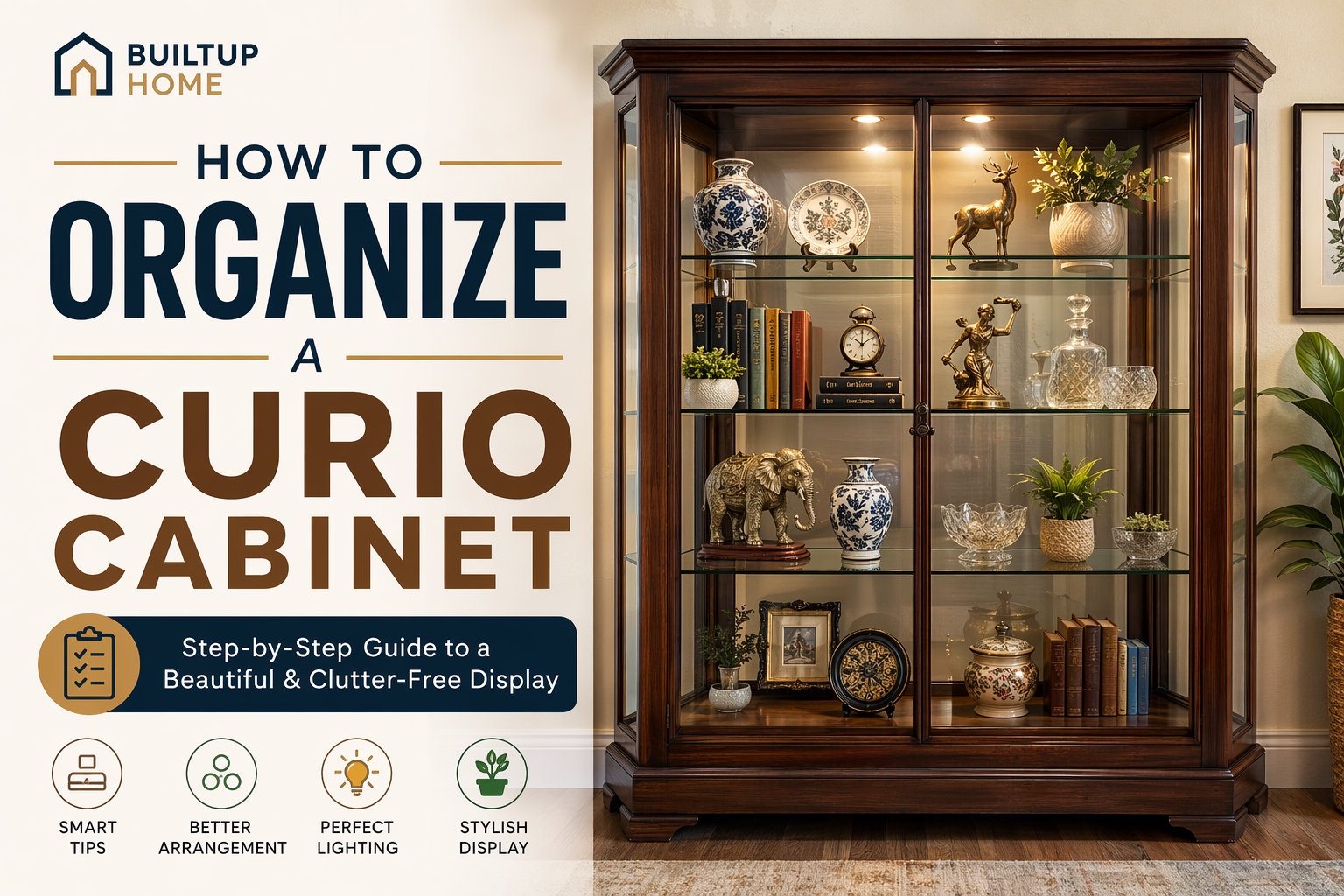
A Complete Styling & Organization Guide by Builtup Home
A curio cabinet is more than just furniture—it’s a personal showcase of your memories, collectibles, and style. Whether you own a sleek glass cabinet or a vintage wooden display, organizing it properly can turn it into a stunning focal point in your home.
In this in-depth guide by Builtup Home, you’ll learn how to organize a curio cabinet step by step, using expert techniques that balance beauty, functionality, and simplicity.
Why Organizing a Curio Cabinet Matters
A well-organized curio cabinet does more than look good—it enhances your entire space. When arranged thoughtfully, it:
- Highlights your most valuable or meaningful items
- Prevents clutter and visual overload
- Protects delicate collectibles
- Makes your décor feel intentional and stylish
Without proper organization, even the most beautiful items can appear messy or lost.
Step-by-Step: How to Organize a Curio Cabinet
Start with a Clean Slate
Begin by removing everything from your cabinet. This gives you a fresh perspective and allows you to clean each surface properly. Dust shelves, wipe down glass panels, and inspect your items before placing them back.
This step also helps you decide what truly deserves a spot in your display.
Define a Clear Theme
Every well-designed curio cabinet starts with a theme. A clear direction helps create a cohesive and visually pleasing arrangement.
You might choose:
- A vintage or antique collection
- Travel souvenirs from different countries
- Minimalist décor with neutral tones
- A color-coordinated display
- Nature-inspired elements like shells or stones
Avoid mixing too many unrelated items, as it can make the cabinet feel chaotic.
Group Similar Items Together
Grouping is one of the simplest yet most powerful organization techniques. Arrange items based on shared characteristics such as:
- Type (figurines, glassware, books)
- Color palette
- Size or shape
- Material (ceramic, metal, wood)
This creates harmony and makes your cabinet easier to visually navigate.
Use the Rule of Odd Numbers
Designers often rely on the “rule of odds” to create more natural-looking displays. Instead of placing items in pairs, arrange them in groups of three or five.
Odd-numbered groupings feel more dynamic and less rigid, adding visual interest to your cabinet.
Create Height and Depth
Flat arrangements can look dull. To make your cabinet more engaging:
- Place taller items at the back
- Position smaller items in front
- Use risers or stacked books to elevate certain pieces
This layering technique ensures every item is visible and adds dimension to your display.
Maximize Vertical Space
Make full use of your cabinet’s height without overcrowding it. You can:
- Add tiered stands or mini shelves
- Carefully stack compatible items
- Place lighter or less-used items on higher shelves
This approach keeps your cabinet efficient yet elegant.
Leave Space Between Items
One of the biggest mistakes people make is overcrowding. A well-organized curio cabinet includes empty space, allowing each item to stand out.
Think of it as giving your pieces “breathing room.” The result is a cleaner, more refined look.
Highlight a Focal Point
Each shelf should feature a standout piece that draws attention. This could be:
- A unique sculpture
- A rare collectible
- A decorative vase or clock
Place it at eye level and arrange smaller items around it to support the display.
Use Containers for Small Items
Tiny objects can easily look cluttered when scattered. Keep them organized by placing them in:
- Small decorative trays
- Glass bowls
- Compact boxes
This keeps everything tidy while still allowing you to showcase your collection.
Organize by Accessibility
Think about how often you use certain items. Place frequently used pieces on lower shelves for easy access, while keeping delicate or rarely used items higher up.
This makes your cabinet both practical and visually appealing.
Add Lighting for Impact
Lighting can dramatically enhance your curio cabinet. Consider installing:
- LED strip lights
- Small spotlights
- Soft ambient lighting
Proper lighting highlights textures, colors, and details, making your display feel more luxurious.
Maintain and Refresh Regularly
Organization is not a one-time task. To keep your cabinet looking its best:
- Dust regularly
- Rotate items seasonally
- Remove anything that no longer fits your theme
Refreshing your display keeps it interesting and up to date.
What to Display in a Curio Cabinet
If you’re unsure what to include, here are some popular options:
- Collectibles and antiques
- Fine china or glassware
- Travel souvenirs
- Awards and memorabilia
- Decorative ceramics
- Books or vintage pieces
Choose items that have meaning or visual appeal to create a display that tells your story.
Common Mistakes to Avoid
To achieve a polished look, avoid these common errors:
- Overcrowding shelves
- Mixing too many styles without a theme
- Ignoring height variation
- Using poor or no lighting
- Lacking a clear focal point
A curio cabinet should showcase—not overwhelm.
Expert Tips from Builtup Home
- Stick to a consistent color palette for a cohesive look
- Rotate décor items every few months
- Use reflective surfaces or mirrors to add depth
- Display fewer, more meaningful items instead of everything at once
Final Thoughts
Organizing a curio cabinet is both a creative and practical process. With thoughtful planning and a clear design approach, you can transform your cabinet into a beautiful centerpiece that reflects your personality and style.
At Builtup Home, we believe every home deserves displays that feel intentional, elegant, and uniquely yours. Take your time, experiment with layouts, and enjoy the process of curating your perfect cabinet.
FAQs
How do I make my curio cabinet look organized?
Use grouping, spacing, and a clear theme while avoiding overcrowding.
How often should I rearrange my curio cabinet?
Every couple of months or whenever you add new items.
What is the best layout for a curio cabinet?
Layer items by height, use focal points, and arrange in odd-numbered groups.
Can I mix different décor styles?
Yes, but keep a unifying element like color or material for balance.