
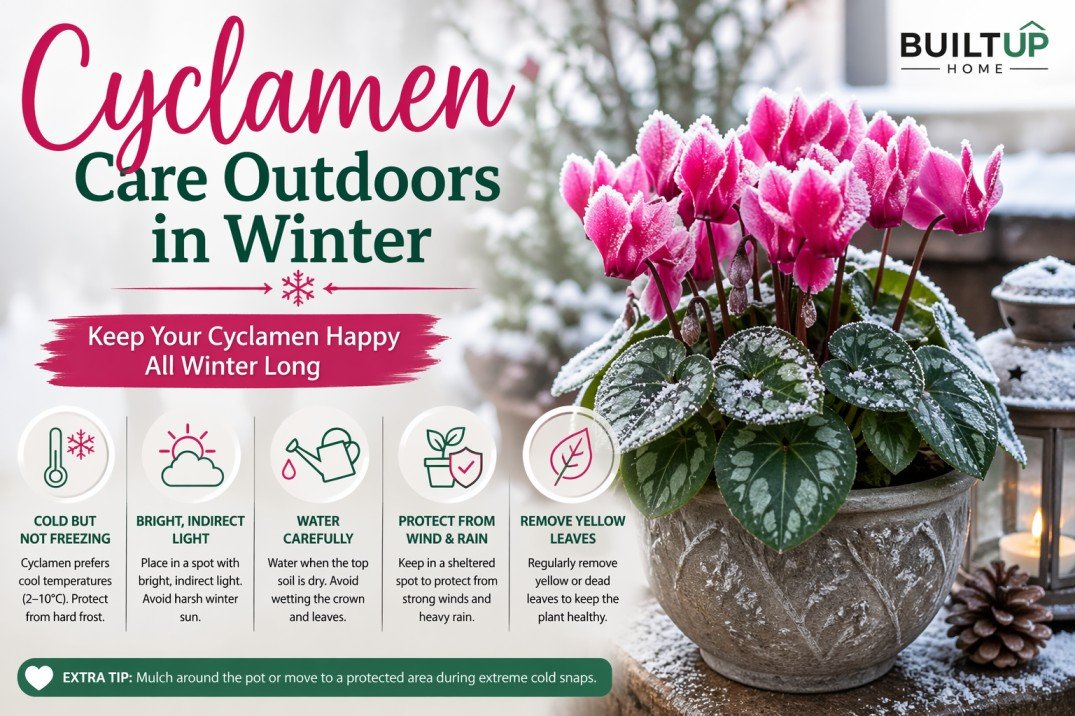
Cyclamen are beloved for their delicate, upswept petals and heart-shaped leaves, bringing life and color to gardens during the coldest months of the year. While many flowering plants retreat during winter, cyclamen can thrive outdoors when given the right care. However, winter conditions—especially cold temperatures, frost, and excess moisture—can challenge their survival if not managed properly.
In this comprehensive guide by Builtup Home, you’ll learn everything you need to know about caring for cyclamen outdoors in winter, from choosing the right variety to protecting your plants from harsh weather.
What Makes Cyclamen Special in Winter?
Cyclamen are unique because they naturally grow during cooler seasons. Unlike most plants, they prefer mild cold conditions and often bloom from late autumn through early spring. Their vibrant flowers—ranging from white and pink to deep red and purple—make them a standout feature in winter gardens.
However, not all cyclamen are suited for outdoor winter conditions. Understanding the difference between hardy and tender varieties is the first step toward success.
Choosing the Right Cyclamen for Outdoor Winter Care
Hardy Cyclamen (Best for Outdoors)
Hardy species such as Cyclamen coum and Cyclamen hederifolium are well-suited for outdoor winter planting. These varieties can tolerate cold temperatures and even light frost when planted in the ground or sheltered areas. They are ideal for naturalizing under trees, along garden borders, or in shaded rock gardens.
Tender Cyclamen (Needs Protection)
The popular florist cyclamen (Cyclamen persicum) is less tolerant of cold and frost. While it can sometimes survive outdoors in mild climates, it generally requires protection or should be grown in containers that can be moved indoors during extreme weather.
Ideal Growing Conditions for Winter Cyclamen
Creating the right environment is key to keeping cyclamen healthy throughout winter.
Light Requirements
Cyclamen prefer bright but indirect light. Outdoors, they thrive in partial shade or dappled sunlight, such as beneath deciduous trees or near walls that provide filtered light. Avoid placing them in direct, harsh sunlight or exposed windy areas.
Temperature Needs
Hardy cyclamen can survive temperatures slightly below freezing for short periods. However, prolonged frost or freezing winds can damage flowers and foliage. A sheltered location, such as near a building or under tree cover, helps regulate temperature and protect plants.
Soil and Drainage
Well-draining soil is essential for cyclamen, especially in winter when excess moisture can lead to rot. They prefer slightly acidic to neutral soil enriched with organic matter like compost or leaf mold.
Heavy, clay soils should be improved with sand or grit to enhance drainage. Raised beds or sloped areas also help prevent water accumulation.
How to Care for Cyclamen Outdoors in Winter
Protecting from Frost
Although hardy cyclamen can tolerate light frost, extra protection is beneficial during severe cold spells. Applying a layer of mulch—such as dry leaves, bark, or straw—around the plants helps insulate the soil and protect the tubers.
For potted cyclamen, move containers to sheltered spots like patios, balconies, or against walls during freezing weather.
Watering Practices
Cyclamen require less water in winter compared to their active growth phase. Keep the soil slightly moist but never soggy. Overwatering is one of the most common causes of cyclamen failure, leading to root or tuber rot.
Water at the base of the plant and avoid wetting the leaves or crown, as this can encourage fungal diseases.
Shelter from Rain and Wind
Winter rain can be just as harmful as frost. Too much moisture can damage flowers and increase the risk of rot. Place cyclamen in areas protected from heavy rainfall, such as under eaves or garden structures.
Strong winds can also stress plants and dry out the soil quickly, so positioning them in a sheltered location is essential.
Feeding and Fertilizing
Cyclamen are relatively low-maintenance feeders. During winter, a light application of a balanced liquid fertilizer once a month is sufficient to support blooming. Avoid over-fertilizing, as this can lead to excessive leaf growth at the expense of flowers.
Deadheading and Maintenance
Regularly remove faded flowers and yellowing leaves to keep the plant healthy and encourage continuous blooming. Gently twist and pull spent stems from the base rather than cutting them, which helps prevent rot.
Growing Cyclamen in Outdoor Containers
Cyclamen adapt beautifully to container gardening, making them a popular choice for patios and balconies during winter.
Choose pots with proper drainage holes and use a high-quality, well-draining potting mix. Adding a layer of gravel or broken pottery at the bottom can further improve drainage.
Container-grown cyclamen are more vulnerable to temperature fluctuations, so consider insulating pots with bubble wrap or moving them indoors during extreme cold snaps.
Common Winter Problems and How to Fix Them
Yellowing Leaves
This is often caused by overwatering or poor drainage. Adjust watering habits and ensure the soil drains well.
Drooping Flowers
Temperature stress or inconsistent watering can lead to drooping blooms. Keep conditions stable and avoid sudden changes.
Rotting Tubers
Excess moisture is the main culprit. Improve drainage and reduce watering immediately if rot is suspected.
Do Cyclamen Go Dormant in Winter?
Interestingly, cyclamen do not go dormant in winter—in fact, this is their active growing and flowering period. Their dormancy usually occurs in late spring or summer, when temperatures rise.
Understanding this cycle helps gardeners provide the right care at the right time.
Tips for Long-Lasting Winter Blooms
To enjoy vibrant cyclamen flowers throughout winter:
- Choose hardy varieties for outdoor planting
- Provide partial shade and shelter
- Use well-draining soil
- Avoid overwatering
- Protect from heavy frost and rain
- Maintain regular plant hygiene
Final Thoughts
Cyclamen are a perfect addition to any winter garden, offering beauty and color when most plants are dormant. With the right care—especially attention to drainage, temperature, and protection—you can successfully grow cyclamen outdoors even in colder months.
Whether planted in garden beds or displayed in containers, these elegant flowers will reward your efforts with continuous blooms and seasonal charm.