
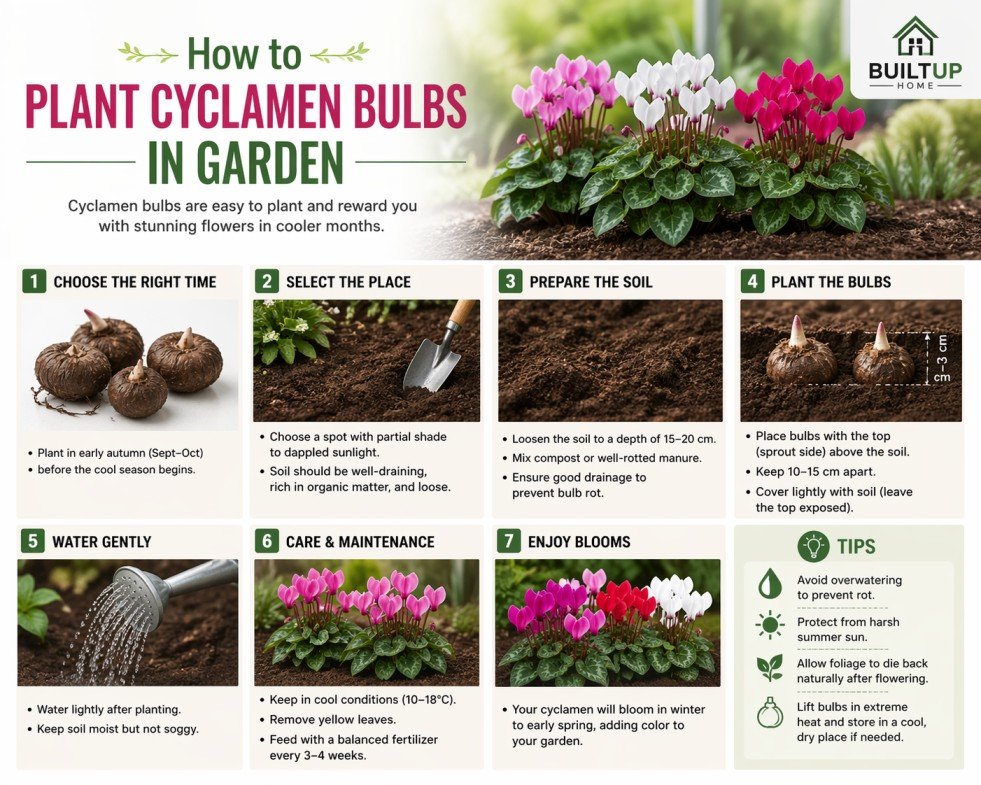
Cyclamen are elegant, low-growing perennial plants known for their beautiful winter and autumn flowers. Growing them from tubers (often called bulbs) in your garden can create stunning seasonal color in shady areas when most other plants are dormant. With the right soil, timing, and planting technique, cyclamen can thrive for many years with minimal maintenance.
In this guide from Builtup Home, you’ll learn step-by-step how to plant cyclamen bulbs in your garden successfully.
Understanding Cyclamen Bulbs (Tubers)
Cyclamen grow from flat, rounded underground storage organs called tubers, not true bulbs. These tubers store energy and allow the plant to survive dormancy during hot or dry seasons. Once established, cyclamen often return every year and may even naturalize in woodland-style gardens.
Hardy varieties such as Cyclamen hederifolium and Cyclamen coum are best suited for outdoor gardens.
Best Time to Plant Cyclamen Bulbs
Timing is very important for success:
- Late summer to early autumn is the ideal planting time
- Soil is still warm, helping roots establish before winter
- Plants will begin active growth in cooler months
Planting too late can reduce flowering and slow establishment.
Ideal Location for Cyclamen in the Garden
Cyclamen naturally grow in woodland environments, so your garden should mimic similar conditions:
Choose a spot with:
- Partial to full shade (under trees or shrubs is ideal)
- Protection from harsh afternoon sun
- Cool and sheltered environment
Avoid open, hot, sunny areas, as cyclamen dislike heat stress.
Soil Requirements for Cyclamen Bulbs
Good soil is the key to preventing rot and encouraging healthy blooms.
Best soil conditions:
- Well-draining soil (very important)
- Rich in organic matter (leaf mold or compost)
- Slightly acidic to neutral pH preferred
- Add grit or sand if soil is heavy or clay-based
💡 Poor drainage is the #1 reason cyclamen bulbs fail in gardens.
Step-by-Step: How to Plant Cyclamen Bulbs
Follow these steps for best results:
1. Prepare the soil
Loosen the soil to at least 15–20 cm deep. Mix in compost or leaf mold to improve fertility and drainage.
2. Dig planting holes
- Space bulbs about 10–15 cm (4–6 inches) apart
- Dig shallow holes (cyclamen prefer shallow planting)
3. Position the tubers correctly
- Place the tuber slightly below the soil surface
- Do not bury too deeply (this can prevent flowering or cause rot)
👉 Some gardeners prefer leaving the top of the tuber just slightly exposed.
4. Cover lightly with soil
Gently cover and press soil down without compacting it too much.
5. Water carefully
- Water thoroughly after planting
- Keep soil moist but never soggy
Overwatering is a common mistake.
After Planting Care
Once planted, cyclamen require very little maintenance.
Watering
- Keep soil lightly moist during active growth
- Reduce watering during dormancy (summer months)
Mulching
- Add a light layer of mulch (leaf litter works best)
- Helps maintain moisture and mimic natural woodland conditions
Feeding
- Use a mild, balanced fertilizer during growing season (optional)
Seasonal Growth Cycle
Cyclamen follow a unique growth pattern:
- Autumn/Winter: Active growth and flowering
- Spring: Leaves may remain briefly
- Summer: Dormancy (leaves die back completely)
👉 Don’t panic if your plant disappears in summer—it is resting.
Common Mistakes to Avoid
Avoid these errors for healthy cyclamen:
- Planting in heavy, waterlogged soil
- Deep burial of tubers
- Full sun exposure
- Overwatering during dormancy
- Disturbing bulbs frequently
Best Garden Uses for Cyclamen
Cyclamen look beautiful in:
- Woodland gardens
- Under deciduous trees
- Rock gardens
- Shaded borders
- Naturalized ground cover areas
They also pair well with ferns, hostas, and snowdrops for layered seasonal interest.
Final Thoughts
Planting cyclamen bulbs in your garden is a rewarding way to bring color and life to shaded spaces during cooler months. With well-drained soil, the right planting depth, and minimal disturbance, these resilient plants can thrive for many years.
At Builtup Home, we believe cyclamen are one of the best low-maintenance flowering plants for adding natural elegance to any garden.