
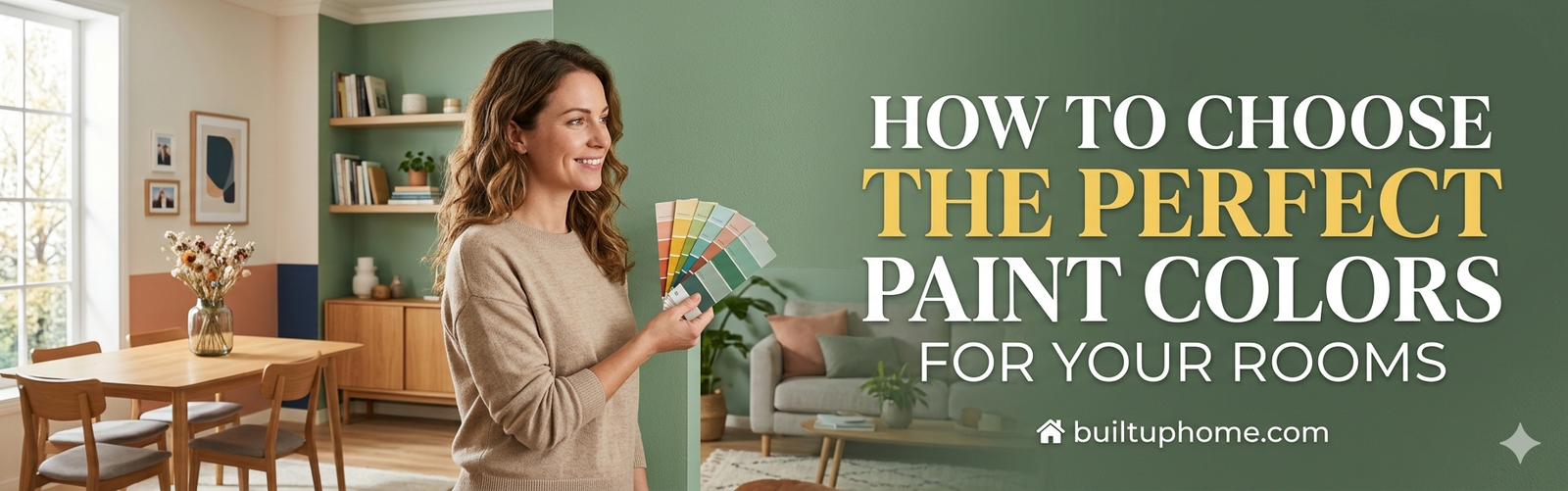
Choosing the right paint color can completely transform your space. Whether you’re redesigning a single room or your entire home, understanding how to choose paint colors for rooms is essential for creating a balanced, inviting atmosphere. At Builtup Home, we believe the right color doesn’t just decorate—it defines how a room feels and functions.
1. Understand the Mood You Want to Create
Every color evokes a different emotional response. Before picking a shade, think about the purpose of the room:
- Living rooms: Warm neutrals or soft greens for relaxation
- Bedrooms: Calm blues or muted tones for better sleep
- Kitchens: Bright whites or yellows for energy and freshness
- Offices: Neutral or cool tones for focus and productivity
Choosing a color aligned with the room’s function ensures a cohesive and comfortable environment.
2. Consider Natural and Artificial Lighting
Lighting dramatically affects how paint colors appear. A shade that looks perfect in the store may look completely different at home.
- Natural light: Makes colors appear brighter and more vibrant
- Artificial light: Can add warm or cool undertones depending on the bulb
Test paint samples on your walls and observe them at different times of the day to make the best choice.
3. Use a Color Palette Instead of a Single Shade
Instead of choosing colors randomly, create a palette:
- Primary color: Dominates the room
- Secondary color: Supports the main shade
- Accent color: Adds contrast and personality
This approach helps maintain visual harmony throughout your home.
4. Match Colors with Existing Furniture and Décor
Your wall color should complement—not clash with—your furniture, flooring, and décor items. If your furniture is bold, go for neutral walls. If your décor is minimal, you can experiment with richer wall colors.
5. Understand Undertones
Many colors have subtle undertones that can affect the overall look:
- Warm undertones: Yellow, red, or orange hues
- Cool undertones: Blue, green, or purple hues
Always compare shades side by side to identify undertones and avoid mismatches.
6. Don’t Ignore Room Size and Ceiling Height
Color can visually alter space:
- Light colors: Make small rooms appear larger
- Dark colors: Add coziness but can make rooms feel smaller
- Vertical stripes or lighter ceilings: Create an illusion of height
Use these tricks strategically to enhance your room’s proportions.
7. Test Before You Commit
Never skip testing. Paint small patches on different walls and observe:
- Day vs. night appearance
- Interaction with furniture and lighting
- Overall feel in the space
This simple step can save you from costly mistakes.
8. Follow Trends Carefully
Trends can be tempting, but they change quickly. Instead of going all-in:
- Use trendy colors as accents
- Stick to timeless shades for large surfaces
This keeps your home stylish without frequent repainting.
9. Create Flow Between Rooms
When choosing paint colors for multiple rooms, ensure a smooth transition. Use shades from the same color family or complementary tones to maintain consistency across your home.
10. Trust Your Personal Style
While guidelines are helpful, your home should reflect your personality. If you love a color, there’s always a way to make it work—whether as a feature wall or subtle accent.
Final Thoughts
Learning how to choose paint colors for rooms doesn’t have to be overwhelming. By considering lighting, mood, space, and personal style, you can create a home that feels both beautiful and functional. Builtup Home encourages homeowners to experiment thoughtfully and design spaces that truly feel like their own.